Stances
2013
Curator Sarah Walko wrote about this body of work on the occasion of the exhibition A Bird Went in Search of a Cage (Radiator Gallery, Queens, New York, 2013):
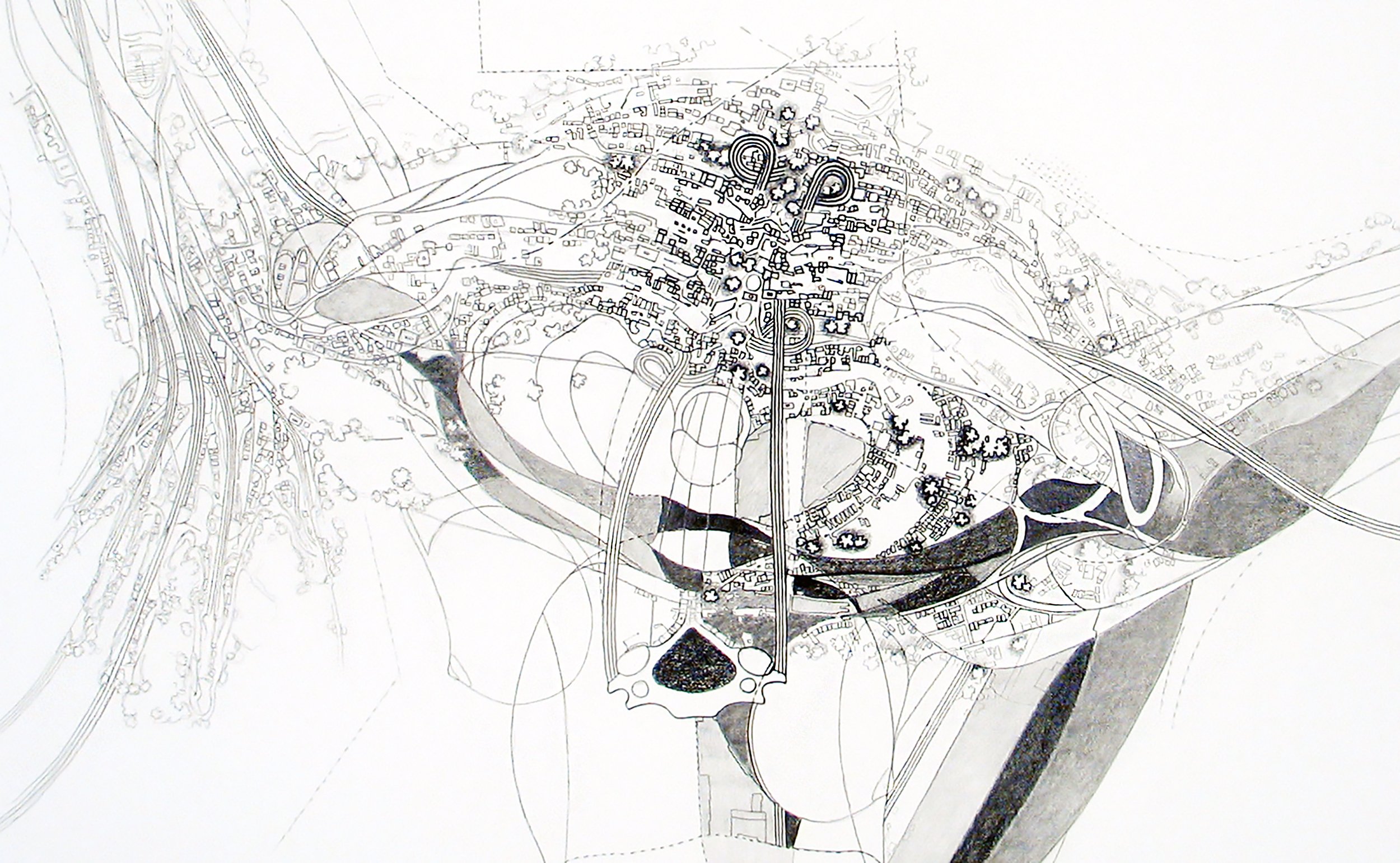
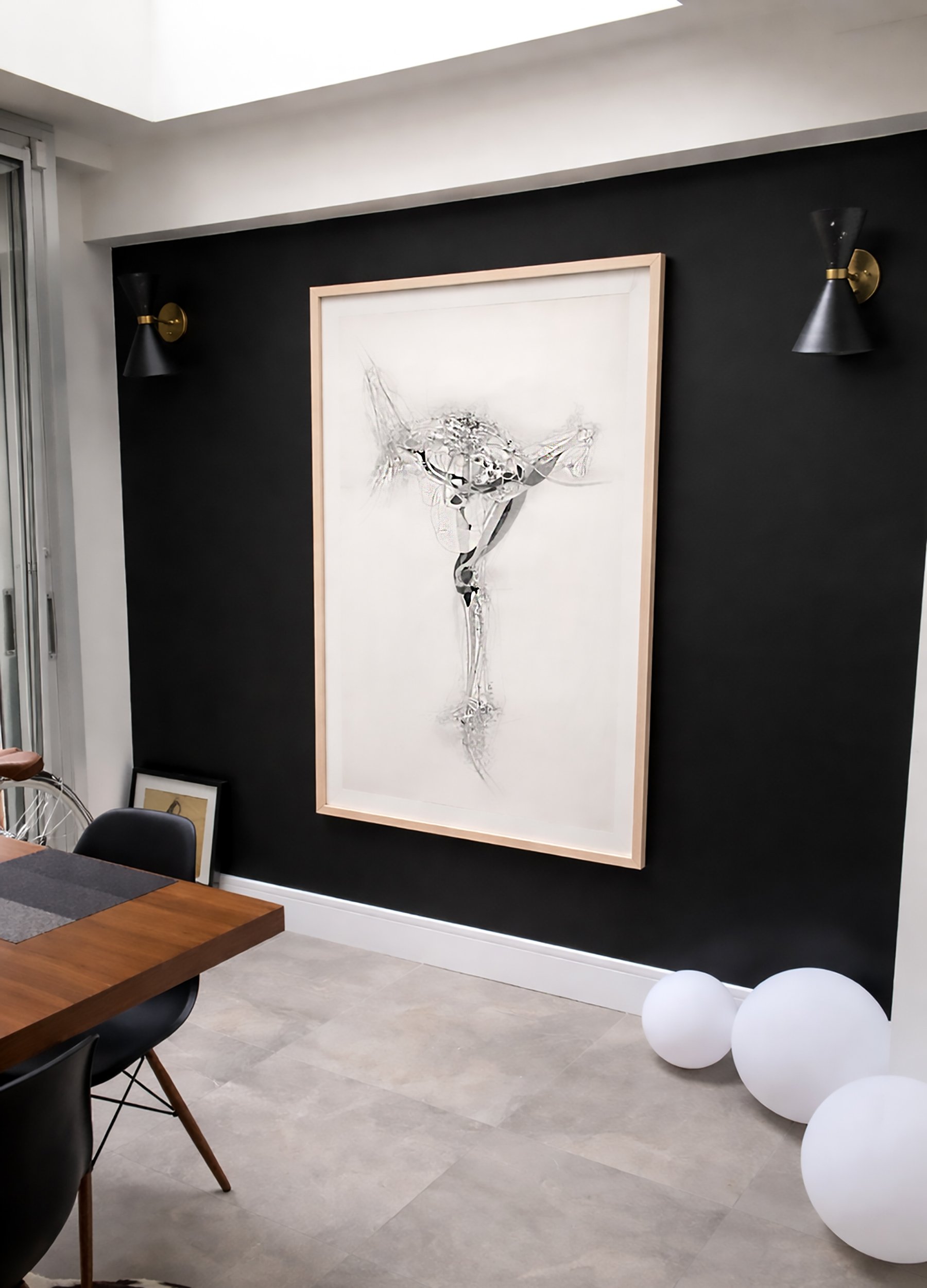
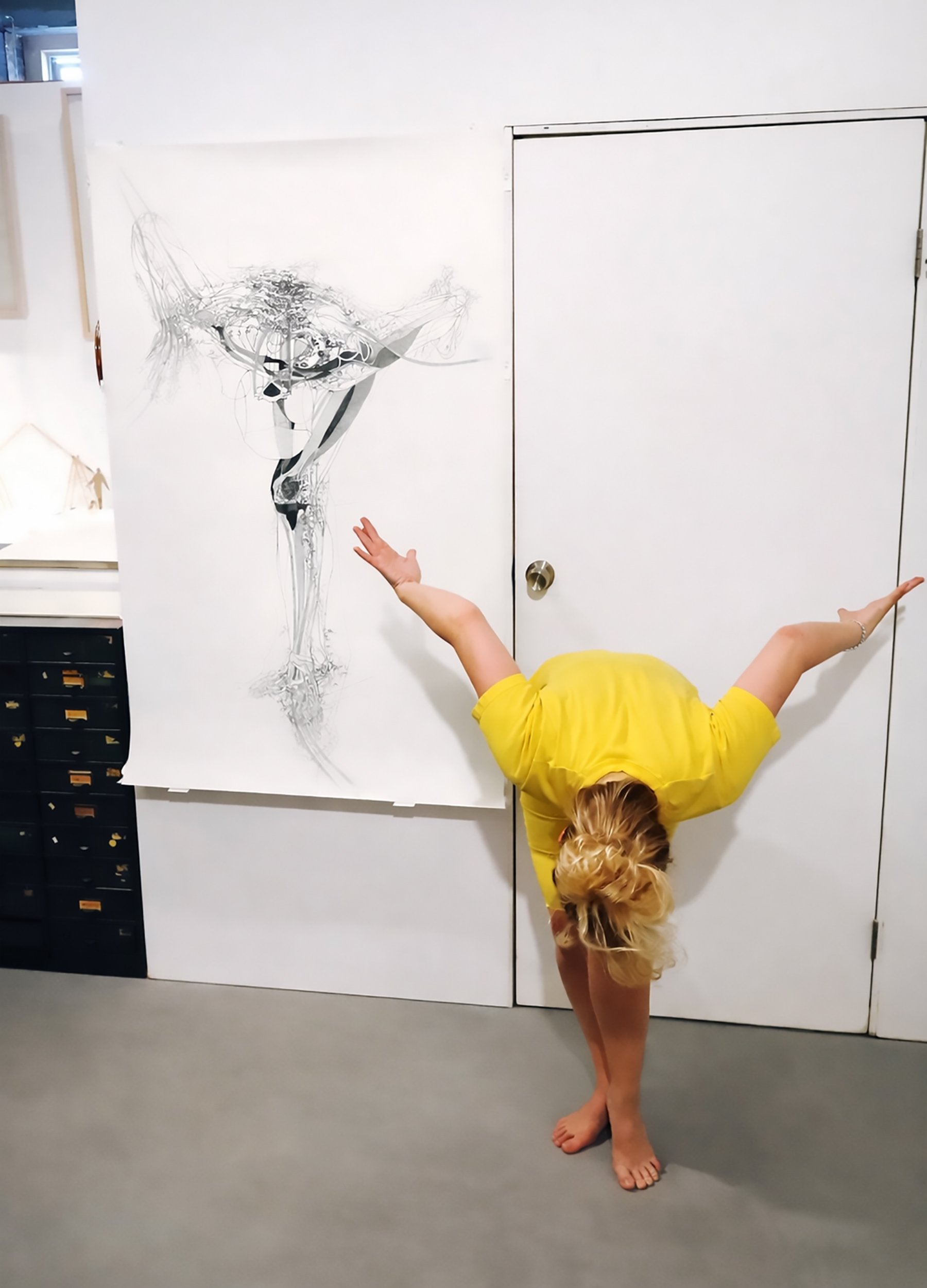
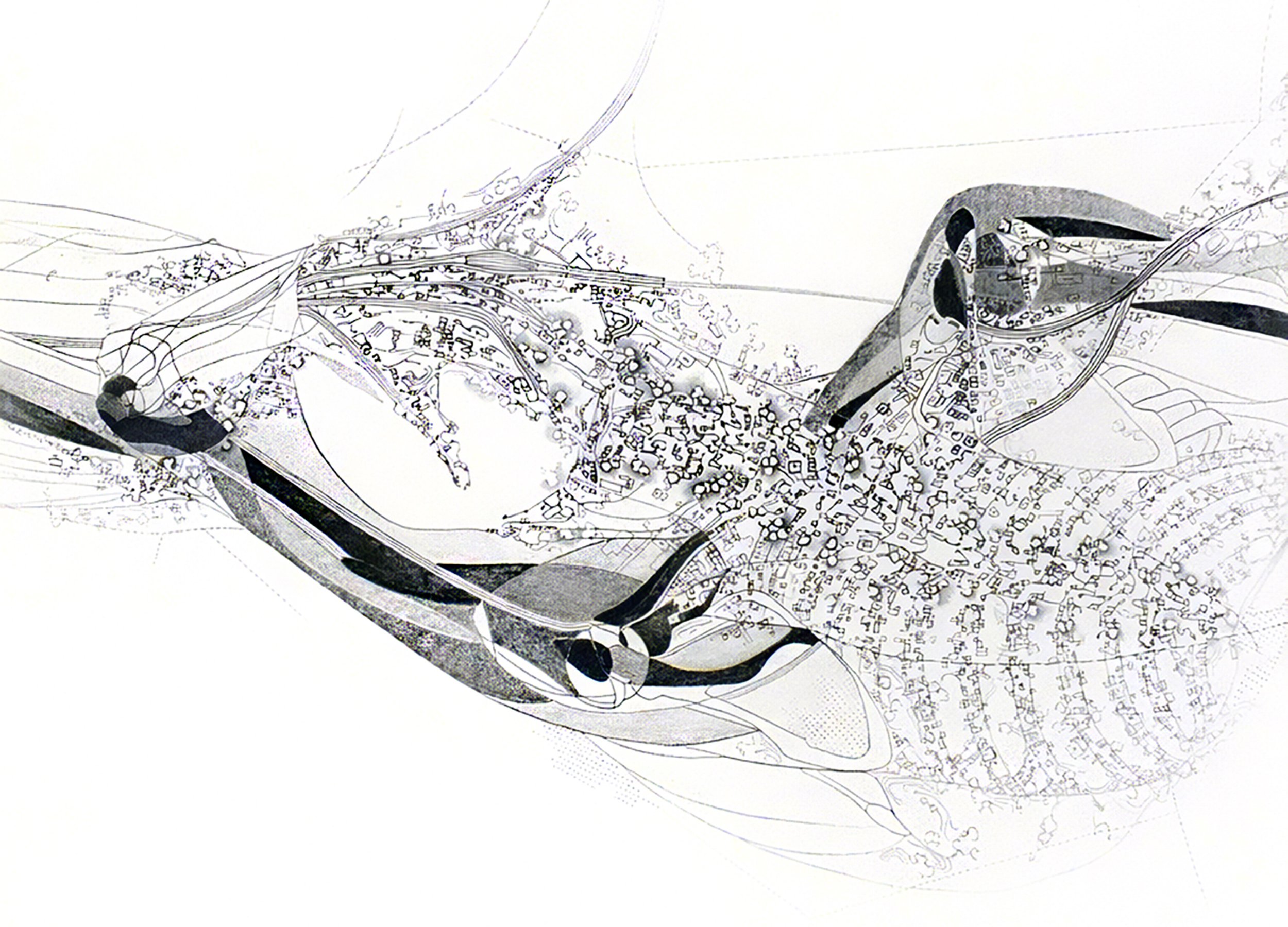
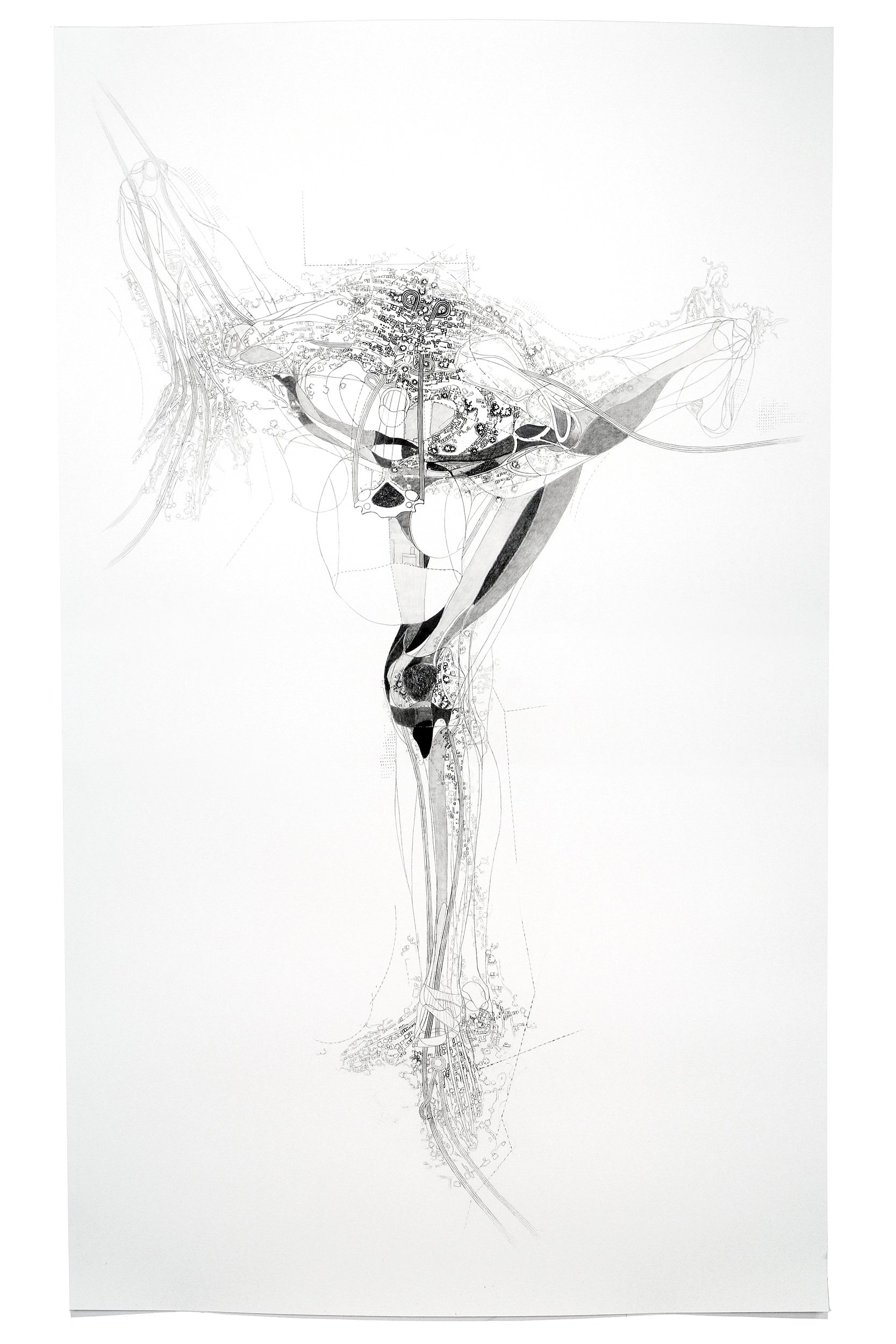
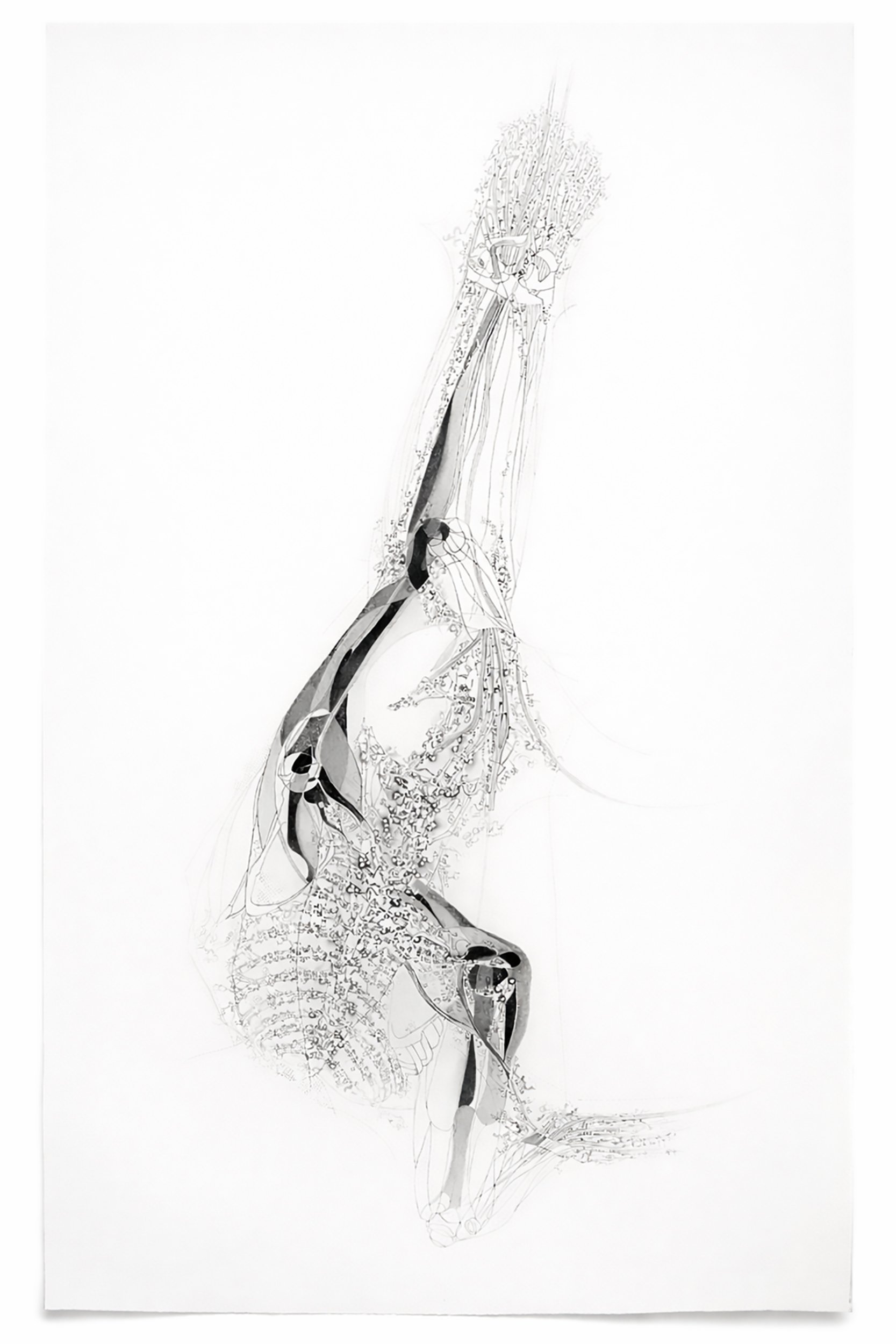
“Eve Laroche-Joubert constructs fixed rules that guide her experimentation and free her unconscious in the process of making her cartographic and anatomical drawings. As she does so, she finds herself in Kafkaesque territories more elaborate than she would have consciously conceived of, uncovering more layers of the labyrinthine complexity of both the body and the structure of cities the deeper she delves. As an alchemist would, she takes her own body as a point of departure. The lines represent the bones, muscles and organs intertwining thus creating a framework. Each architectural pattern is carefully chosen for its geometric qualities and its relevance. The series mixes the visceral, metaphorically and the intellectual with systems of representation; blueprints and geometry. The drawing creates a bridge between the physicality of the body and a very interior world with the relentless activity of the mind within an exterior urban landscape. In her own words, ‘It’s my way of trying to heal from the insanity of the scattered world around us, from the ambient disparity between the natural world and the constructed world.’”
Postures
2013
La commissaire Sarah Walko a écrit à propos de ce corpus d’œuvres à l’occasion de l’exposition A Bird Went in Search of a Cage (Un Oiseau parti à la Recherche d’une Cage) à la Radiator Gallery, Queens, New York, 2013 :
« Ève Laroche-Joubert élabore des règles fixes qui guident son expérimentation et libèrent son inconscient dans le processus de création de ses dessins cartographiques et anatomiques. Ce faisant, elle se retrouve dans des territoires kafkaïens plus élaborés que ce qu’elle aurait consciemment imaginé, mettant au jour, au fil de son exploration, des couches toujours plus profondes de la complexité labyrinthique du corps comme de la structure des villes. À la manière d’une alchimiste, elle prend son propre corps comme point de départ. Les lignes représentent l’entrelacement des os, des muscles et des organes, formant ainsi une armature. Chaque motif architectural est choisi avec soin pour ses qualités géométriques et sa pertinence. La série mêle le viscéral — au sens métaphorique — et l’intellectuel à travers des systèmes de représentation tels que les plans et la géométrie. Le dessin crée un pont entre la physicalité du corps et un monde très intérieur, marqué par l’activité incessante de l’esprit, au sein d’un paysage urbain extérieur. De son propre aveu : “C’est ma manière de tenter de guérir de la folie du monde fragmenté qui nous entoure, de la disparité ambiante entre le monde naturel et le monde construit.” »