Shoulder Path Sequence
2011
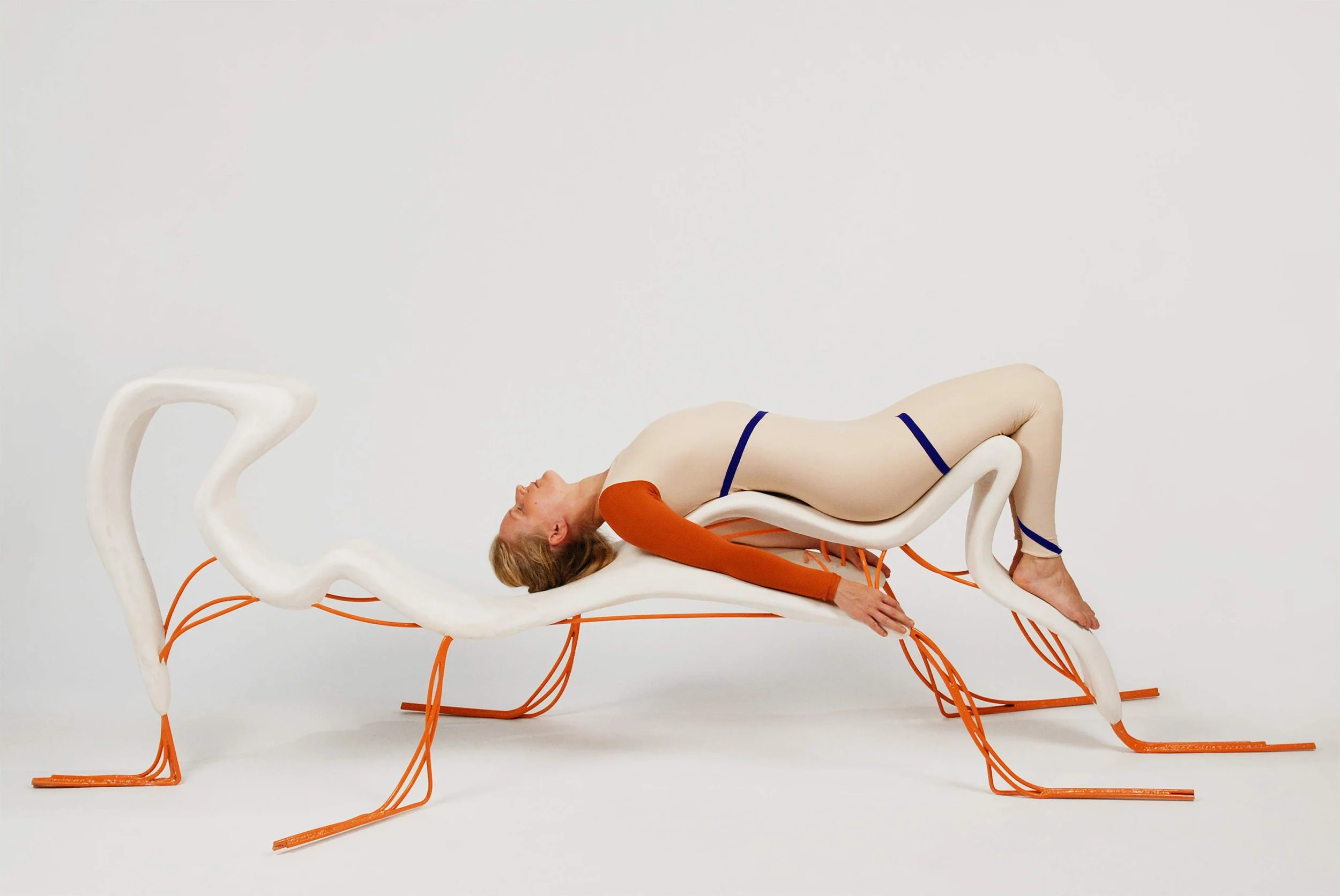
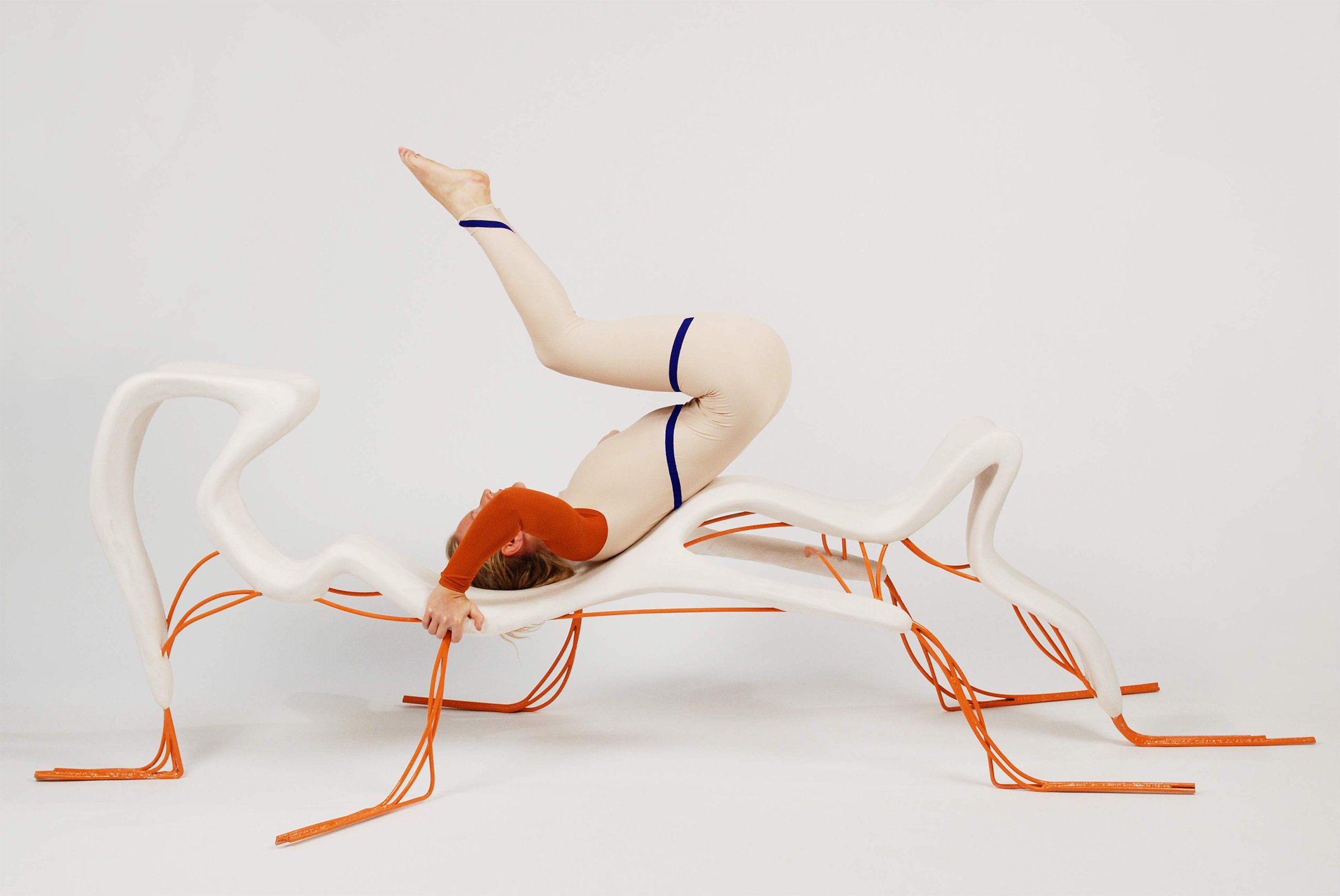
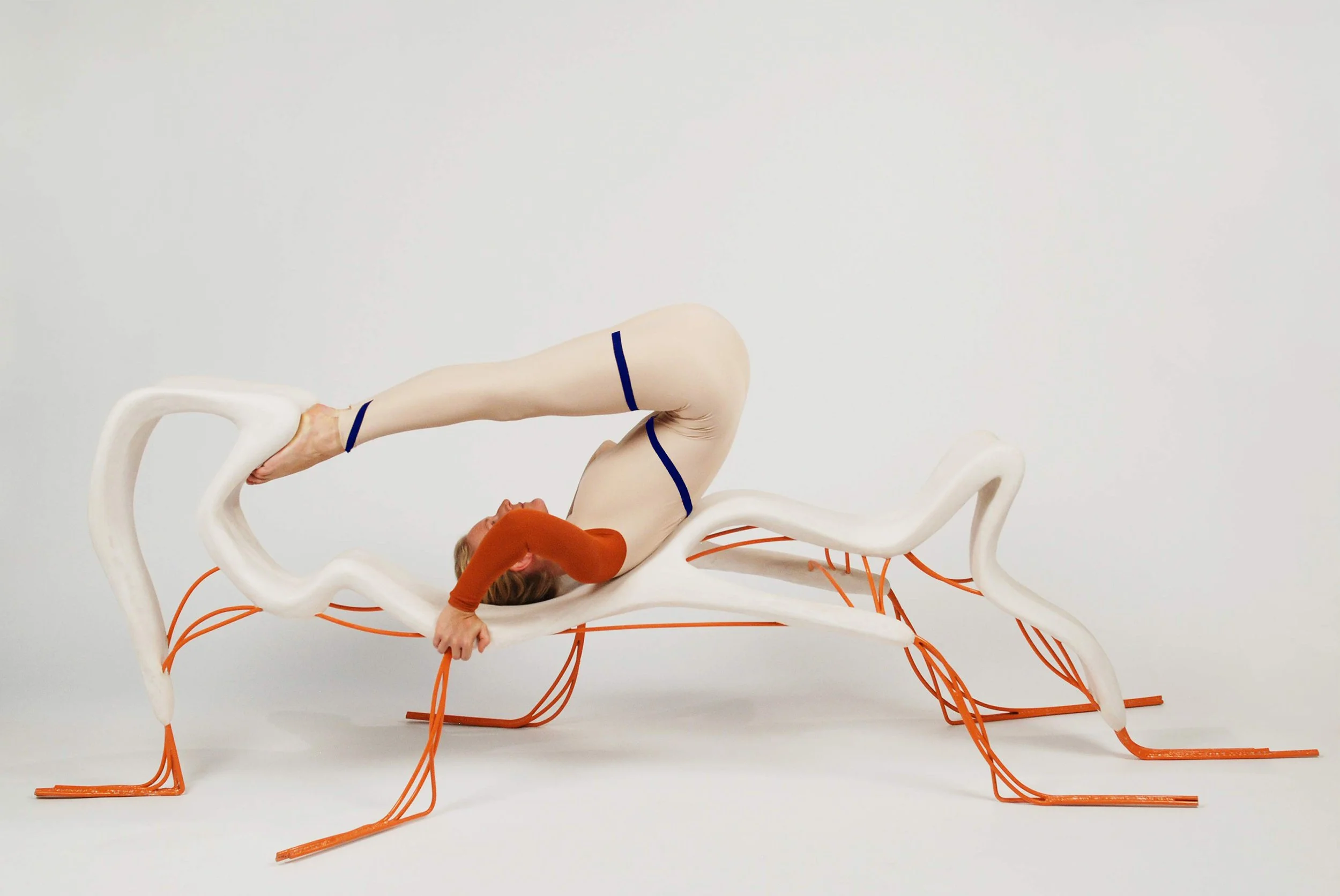
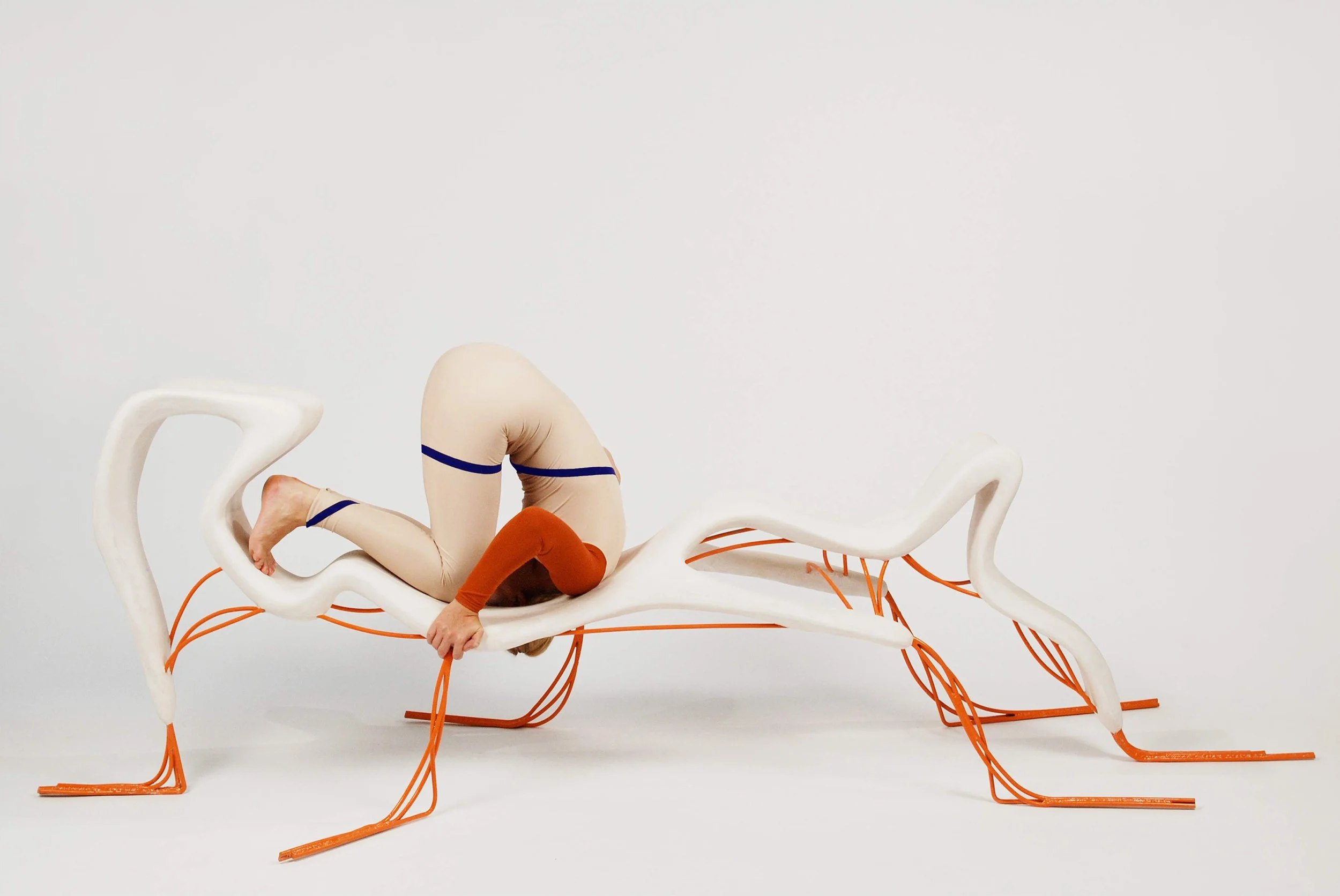
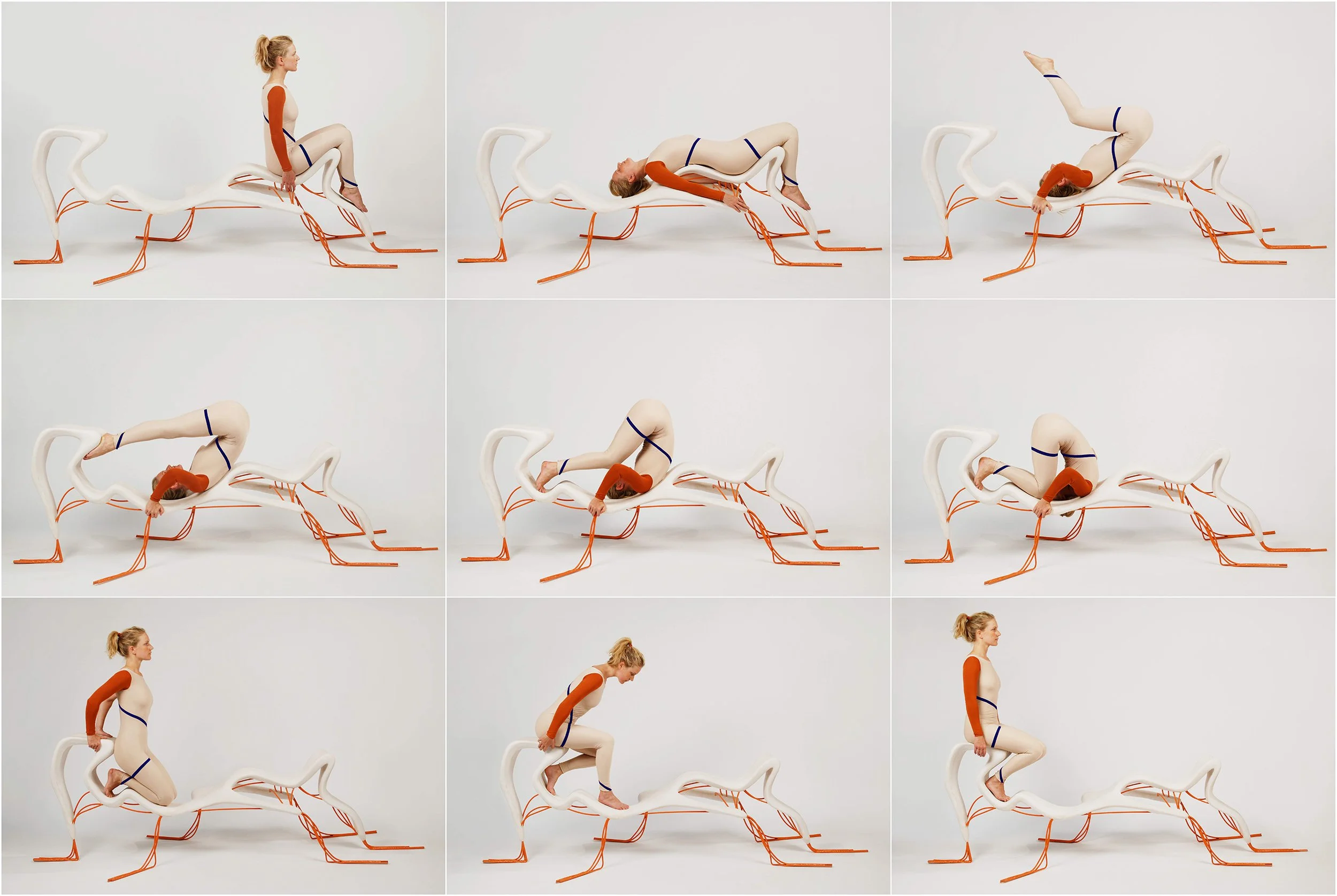
Shoulder Path Sequence is a photographic work created at the request of the curator for the exhibition Blur: Six Artists & Six Designers in Contemporary Practice at the University of the Arts Philadelphia in 2011, in order to accompany the reading of the sculpture Shoulder Path and make its bodily origin perceptible. Conceived as an image of clarification rather than as performative documentation, the photograph unfolds the sculpture through time and reveals the choreographic logic that guided its making. The body does not appear as a spectacular subject, but as a tool for measuring and activating the lines, tensions, and points of support embedded in the form. The costume, designed by Anna Finke, then a costume designer for Merce Cunningham, extends this analytical intention: the shoulder, a major point of rotation, is emphasized in orange, while dark blue lines trace the axes of alignment of the limbs, directly echoing the monumental drawing that served as the blueprint for the sculpture. Shoulder Path Sequence thus operates as a visual bridge between drawing, body, and volume, rendering visible—through the image—the silent choreography contained within the sculptural object.
Séquence du Chemin de l’Épaule
2011
Séquence du Chemin de l’Épaule est une œuvre photographique réalisée à la demande de la commissaire de l’exposition Blur: Six Artists & Six Designers in Contemporary Practice à l'Université des Arts de Philadelphie en 2011, afin d’accompagner la lecture de la sculpture Shoulder Path et d’en rendre perceptible l’origine corporelle. Pensée comme une image de clarification plutôt que comme une documentation performative, la photographie déplie la sculpture dans le temps et révèle la logique chorégraphique qui a présidé à sa fabrication. Le corps n’y agit pas comme un sujet spectaculaire, mais comme un outil de mesure et d’activation des lignes, des tensions et des points d’appui inscrits dans la forme. Le costume, conçu par Anna Finke, alors costumière de Merce Cunningham, prolonge cette intention analytique : l’épaule, point de rotation majeur, y est soulignée par une teinte orangée, tandis que des lignes bleu foncé marquent les axes d’alignement des membres, en écho direct au dessin monumental ayant servi de plan à la sculpture. Séquence du Chemin de l’Épaule fonctionne ainsi comme un pont visuel entre dessin, corps et volume, rendant lisible, par l’image, la chorégraphie silencieuse contenue dans l’objet sculptural.