Drunken Body
2007
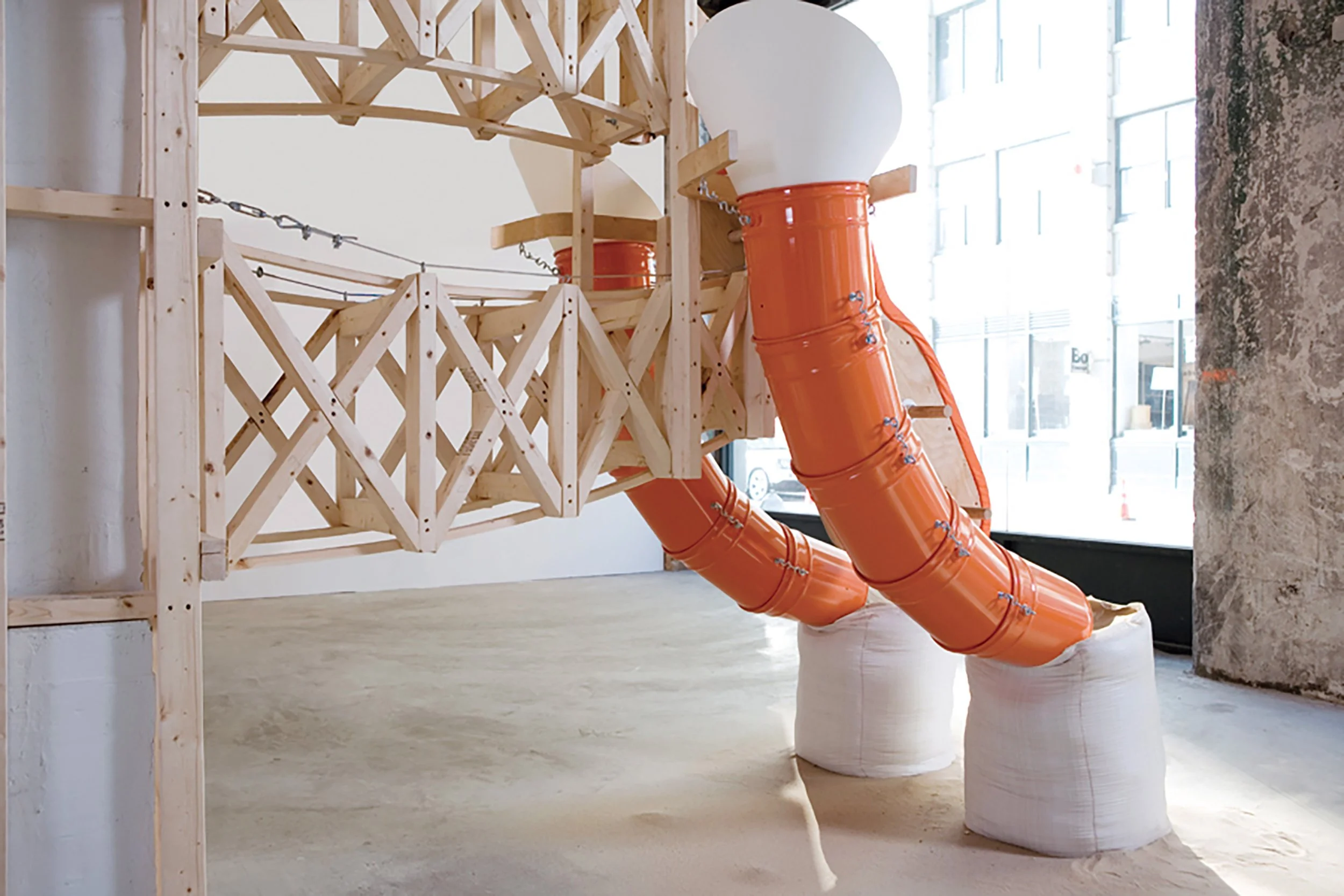
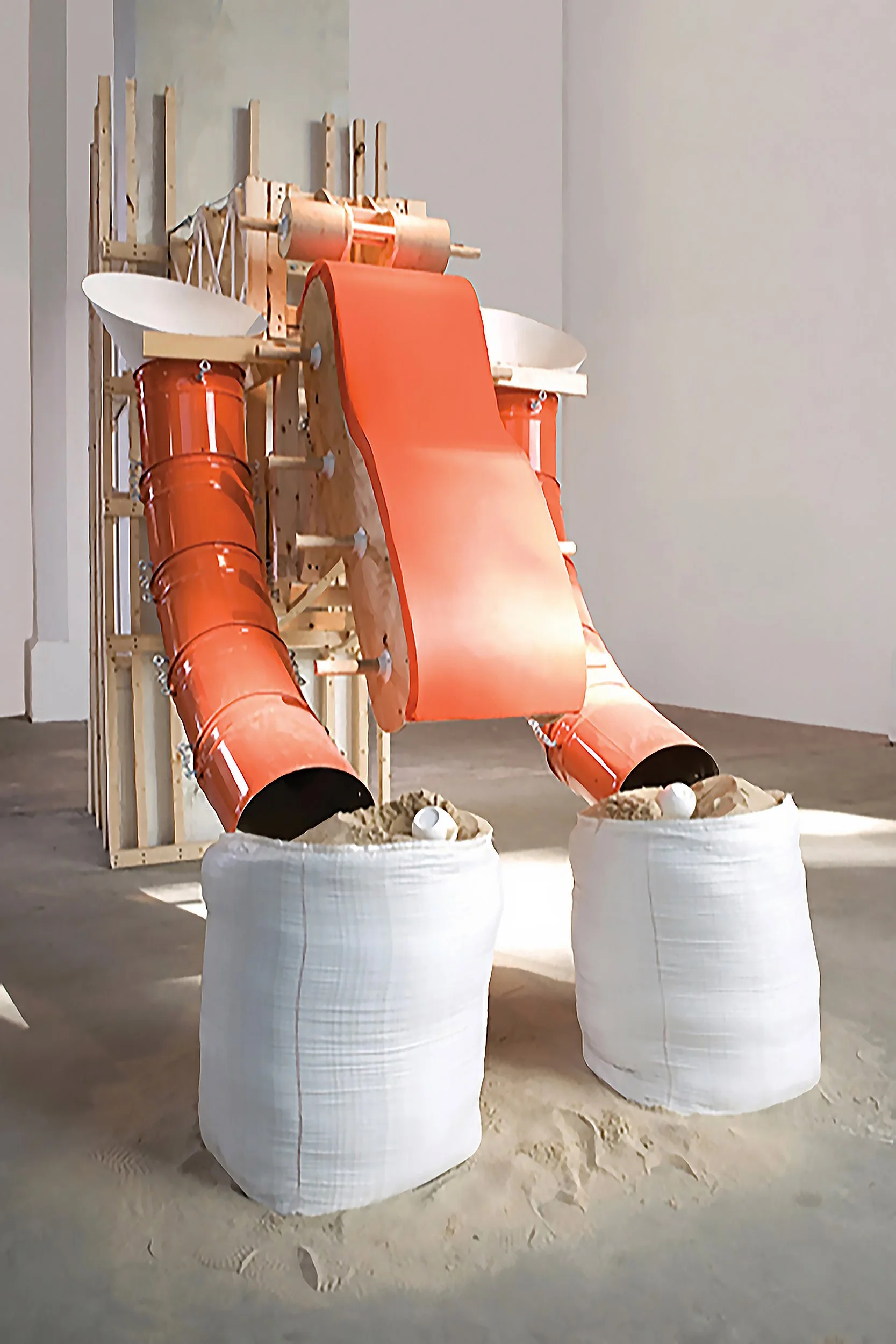
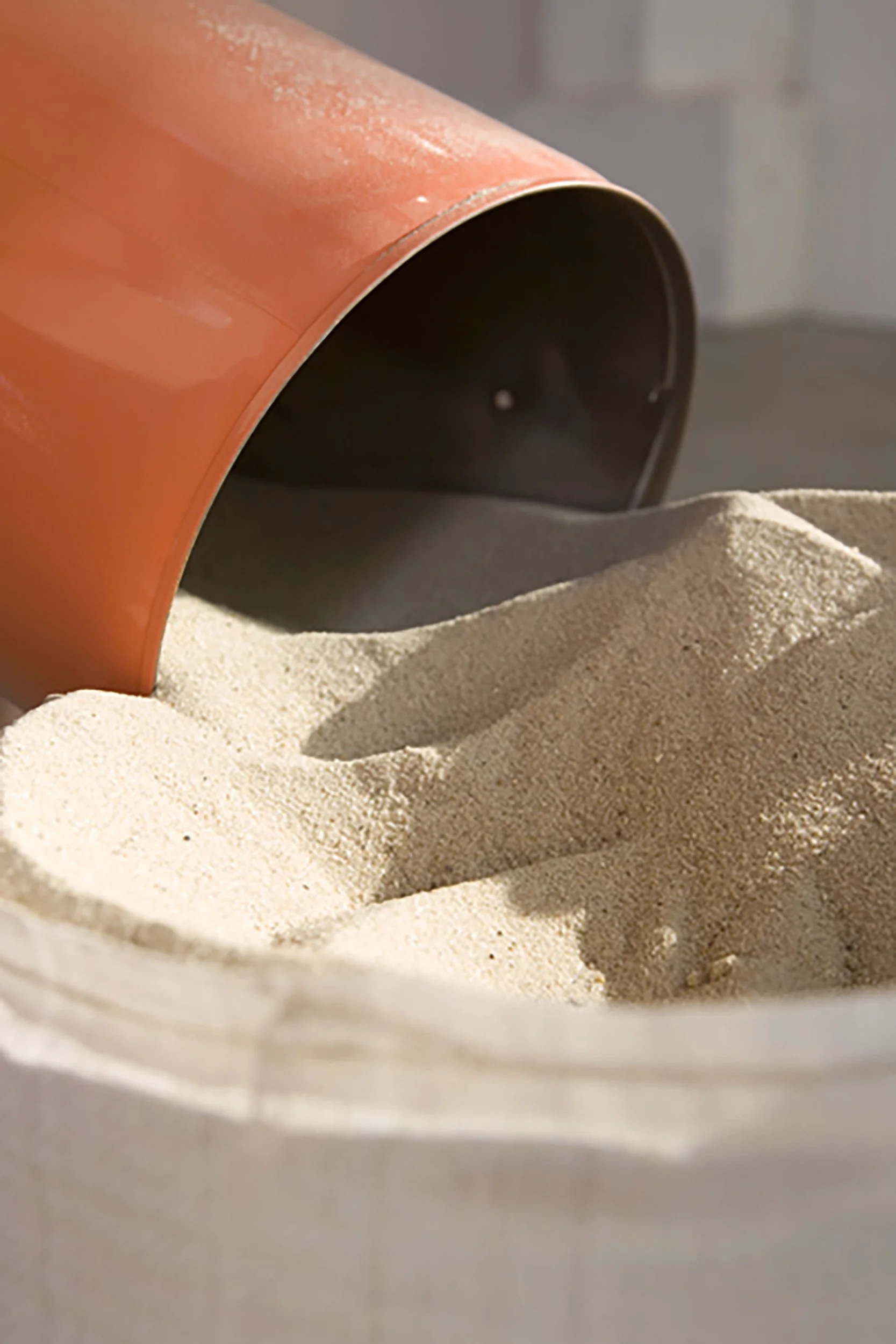
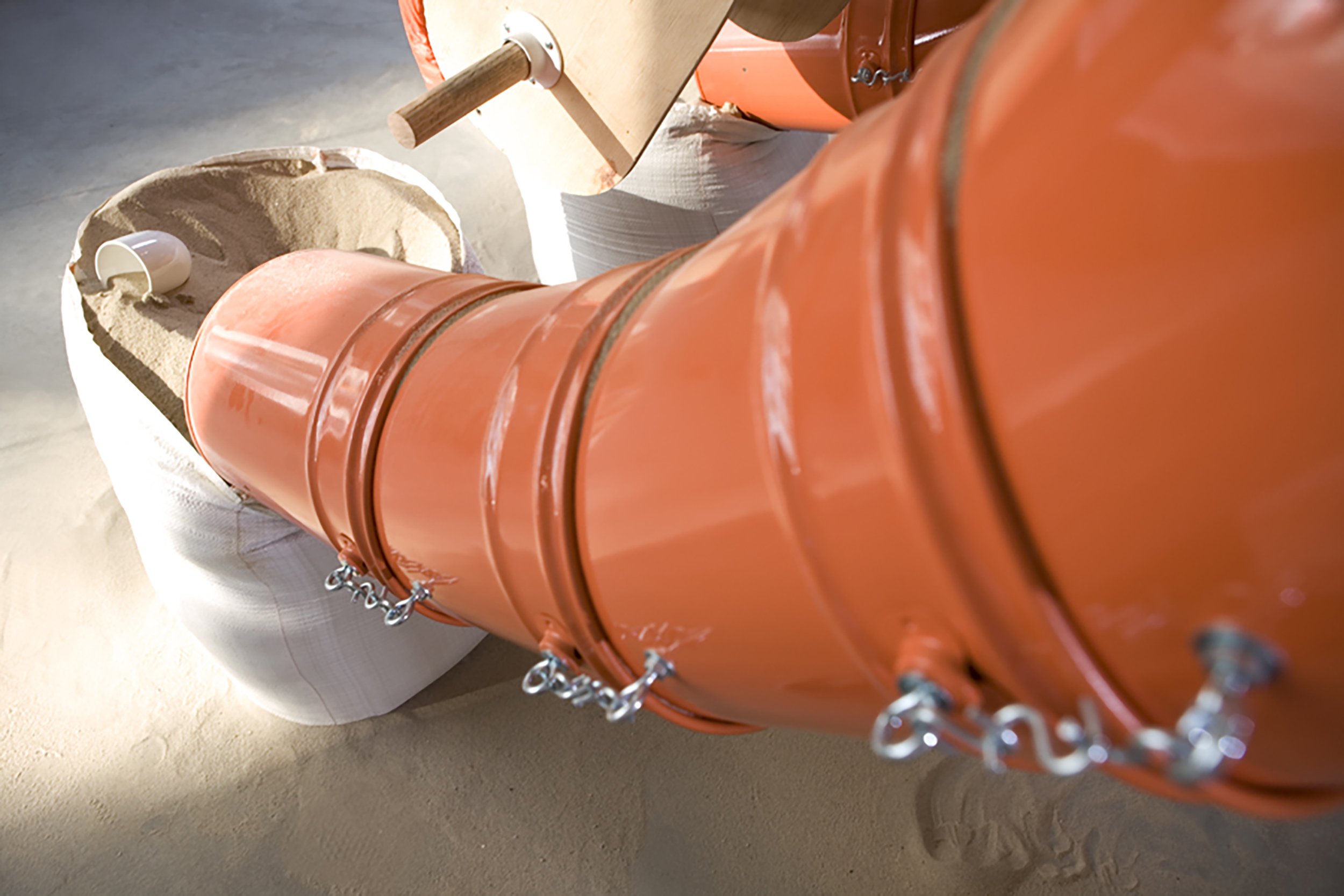
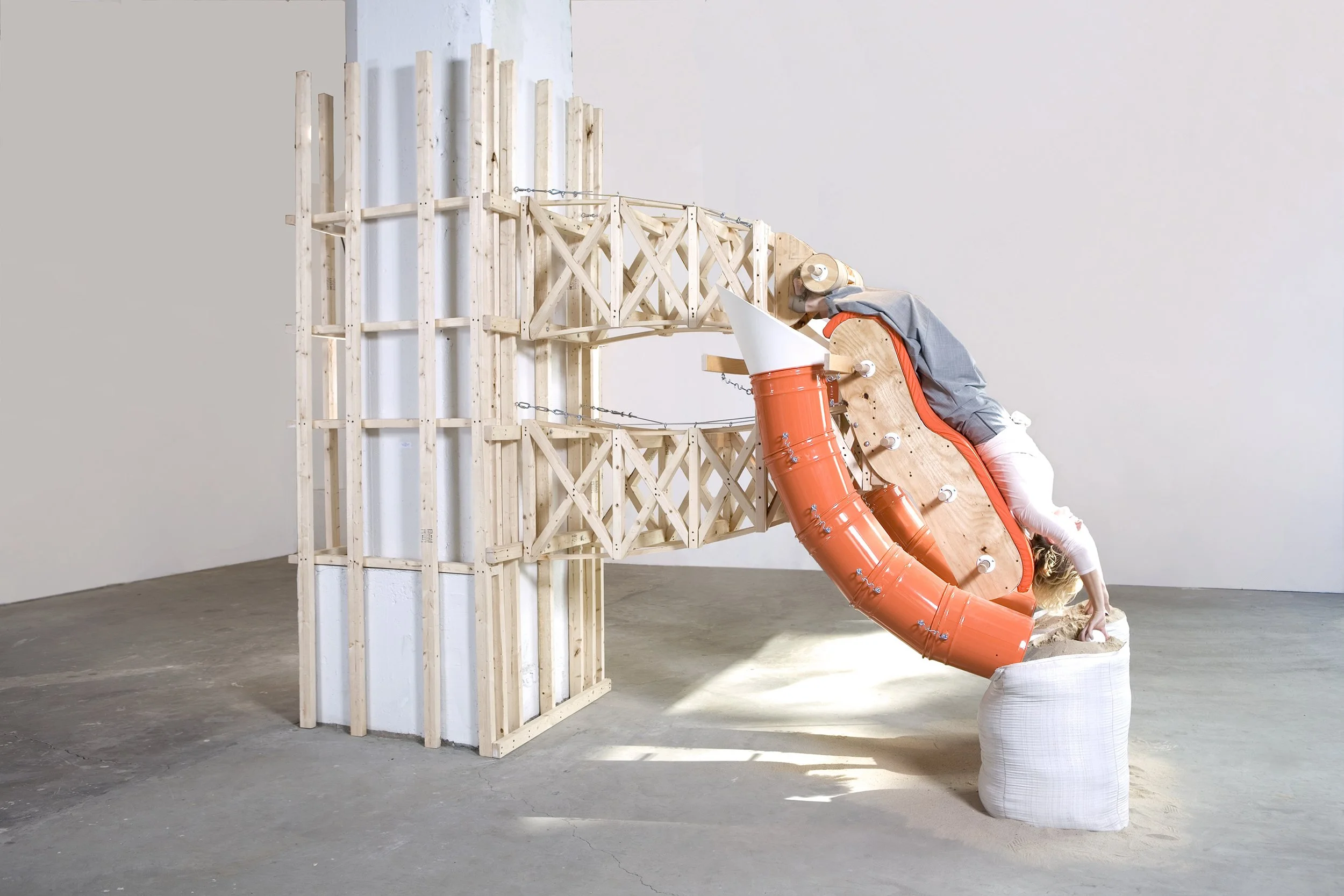
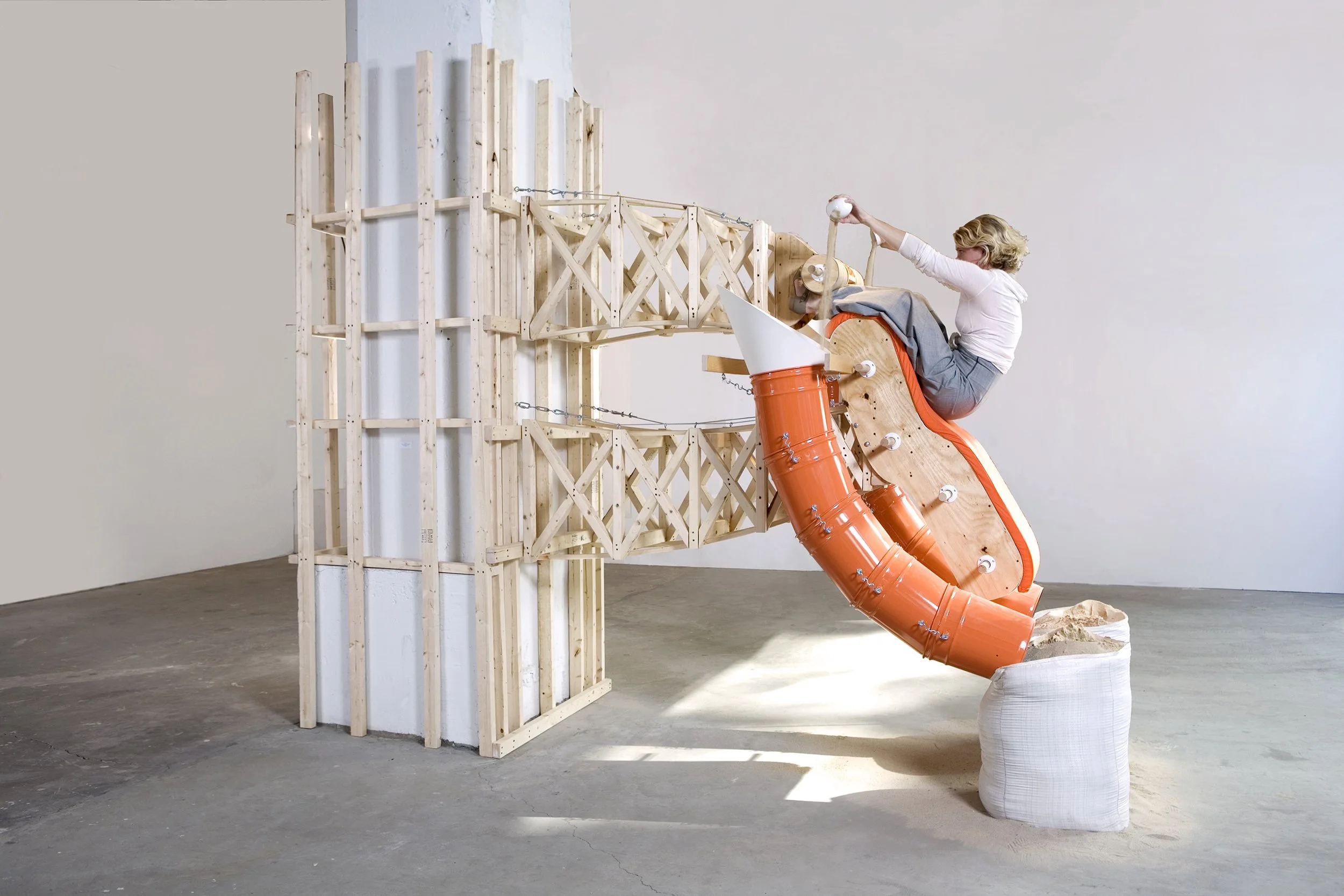
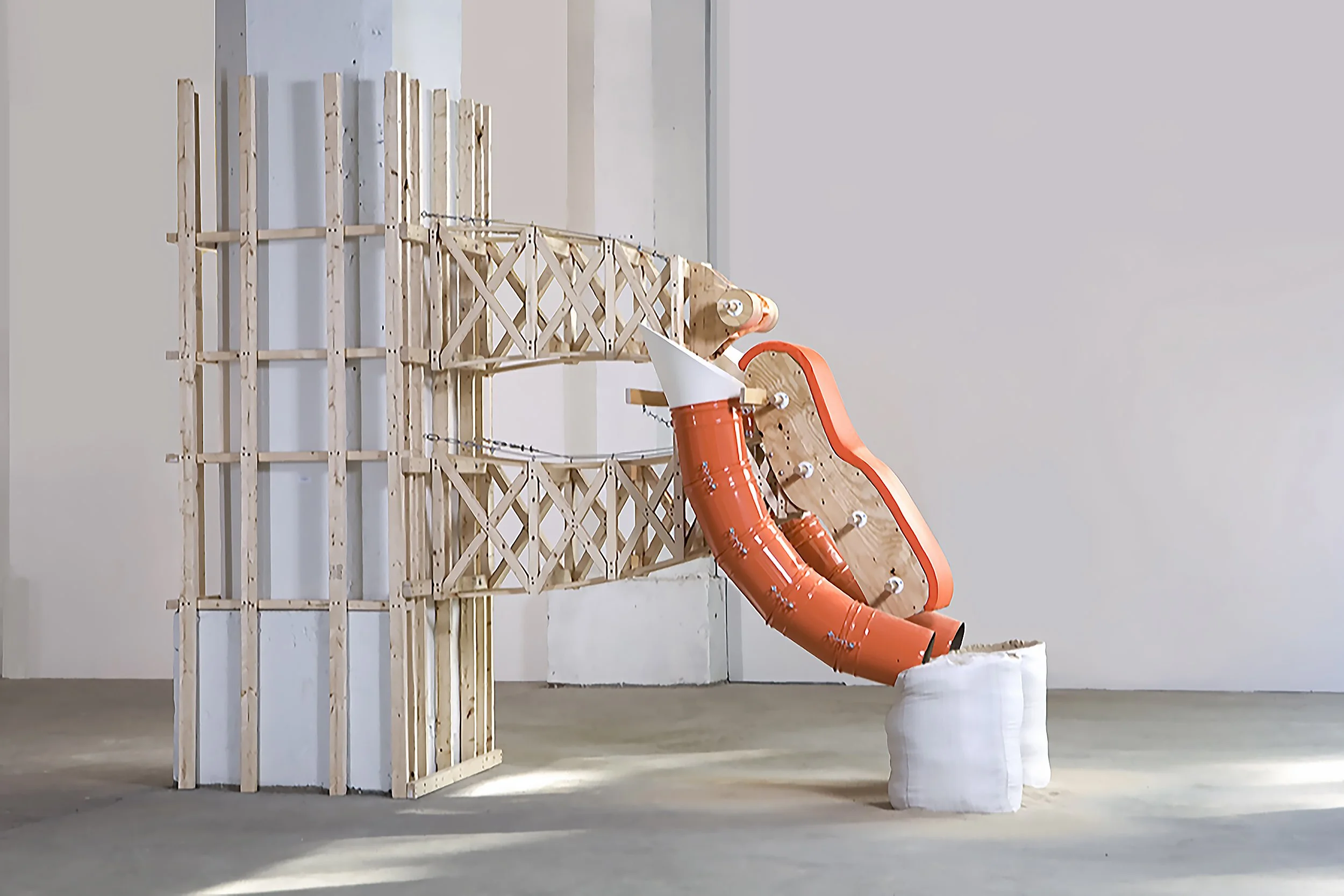
Drunken Body is a performative sculpture that conceives the body as a construction site in progress—simultaneously shaped, constrained, and put to the test by an architecture specifically designed for it. Inspired by the wooden frameworks of North American buildings and by the observation of an intensely sculpted body culture—particularly in the United States—the work takes the form of a suspended apparatus: none of its elements touches the ground; the entire structure is anchored to the wall and must support both its own weight and that of the artist’s engaged body during performances, through a system of triangulation and cabling inspired by bridge engineering. The body is caught within a counterweight mechanism, endlessly emptying and refilling sandbags connected to construction chutes, in a circular movement without resolution. This gesture—at once strenuous, precise, and absurd—evokes the training practices of Shaolin monks, as seen in the cinema of Jackie Chan, as well as the myth of Sisyphus, the figure of an eternal effort condemned to repetition. The color orange, developed specifically for this work—situated between the functional orange of construction sites and the red-orange of warning signals—plays a structuring role and would later become a recurring color in the artist’s subsequent works, notably Shoulder Path. Without pathos or spectacle, Drunken Body holds vulnerability and control, humor and cruelty, in tension, revealing a silent metaphor for the fabrication of the contemporary body and the alienation implied by the relentless pursuit of an ideal form.
Corps Ivre
2007
Corps Ivre est une sculpture performative qui envisage le corps comme un chantier en cours, à la fois façonné, contraint et mis à l’épreuve par une architecture spécifiquement conçue pour lui. Inspirée par les ossatures en bois des bâtiments nord-américains et par l’observation d’une culture du corps intensément modelée — notamment aux États-Unis — l’œuvre prend la forme d’un dispositif suspendu : aucune de ses parties ne touche le sol, l’ensemble s’ancre dans le mur et doit soutenir son propre poids autant que celui du corps engagé de l'artiste lors de performances, grâce à un système de triangulation et de câblage inspiré de l’ingénierie des ponts. Le corps y est pris dans un mécanisme de contrepoids où il vide et remplit inlassablement des sacs de sable reliés à des goulottes de chantier, dans un mouvement circulaire sans résolution. Le geste, à la fois éprouvant, précis et absurde, convoque les entraînements des moines Shaolin — tels qu’ils apparaissent dans le cinéma de Jackie Chan — autant que le mythe de Sisyphe, figure d’un effort éternel condamné à recommencer. La couleur orange, développée spécifiquement pour cette œuvre — entre l’orange fonctionnel du chantier et le rouge-orangé des signaux de danger — joue un rôle structurant et deviendra une couleur récurrente dans les œuvres ultérieures de l'artiste, notamment Shoulder Path. Sans pathos ni spectaculaire, Drunken Body met en tension vulnérabilité et maîtrise, humour et cruauté, révélant une métaphore silencieuse de la fabrication du corps contemporain et de l’aliénation qu’implique la quête incessante d’une forme idéale.