Chute de Pieds
2022
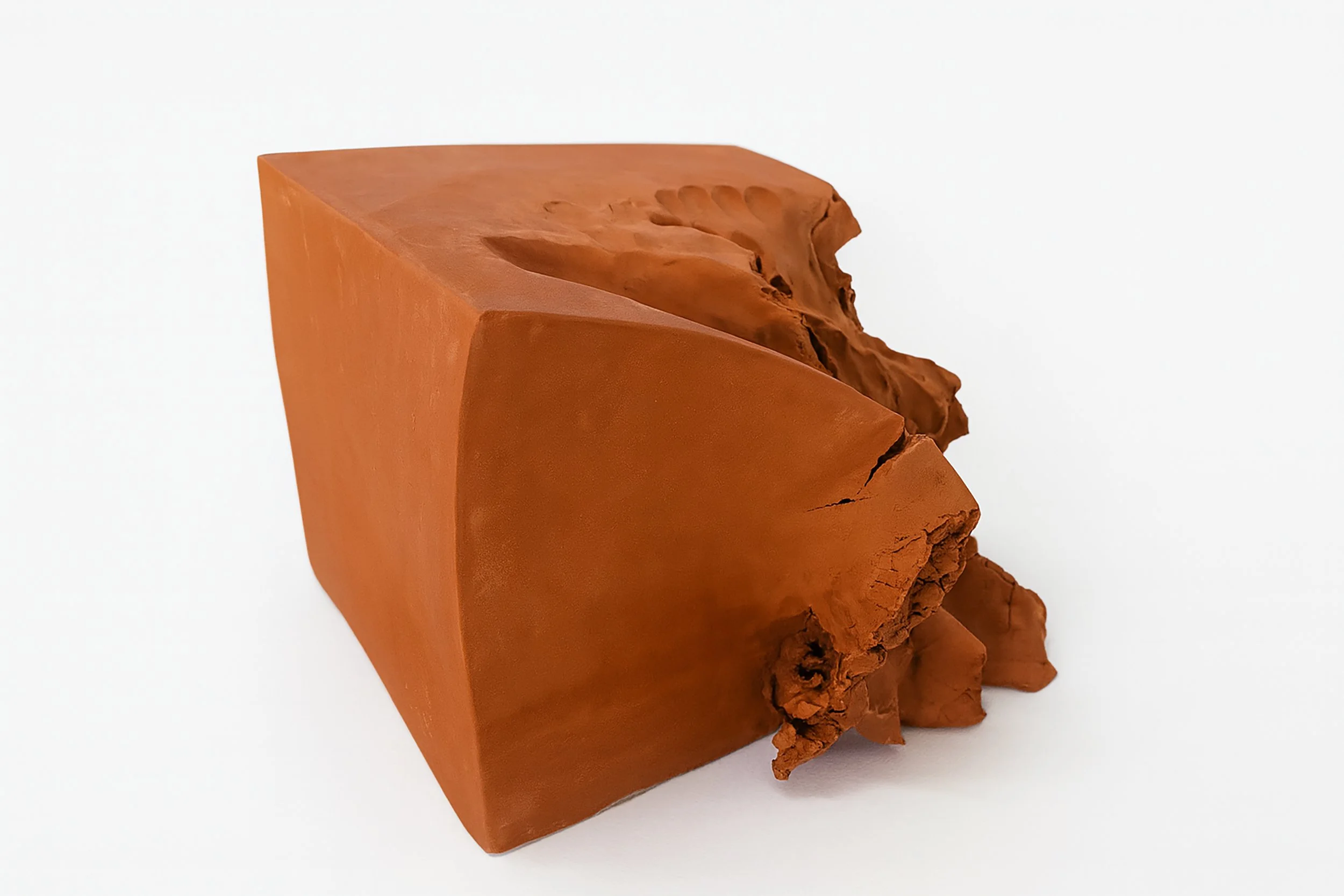
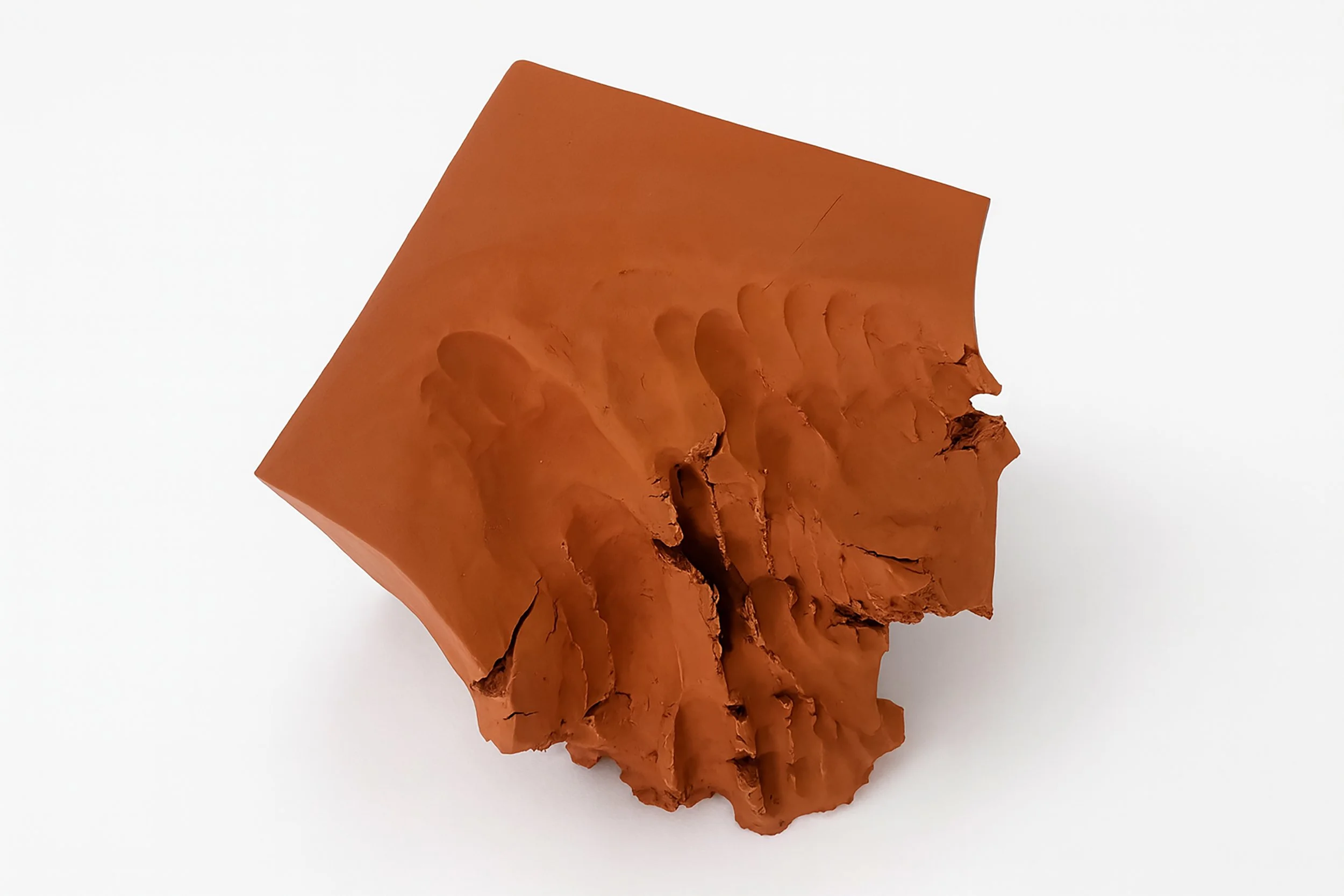
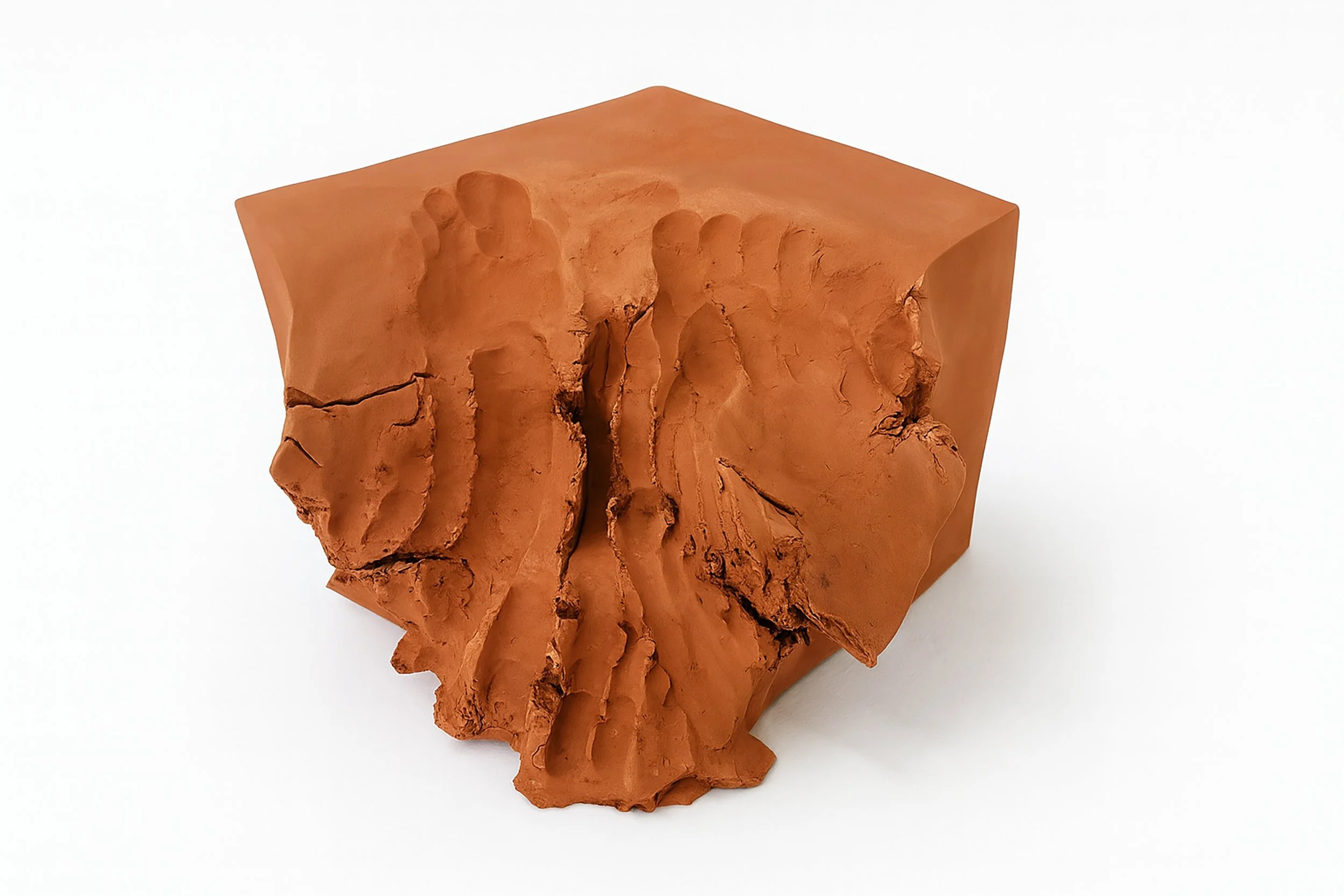
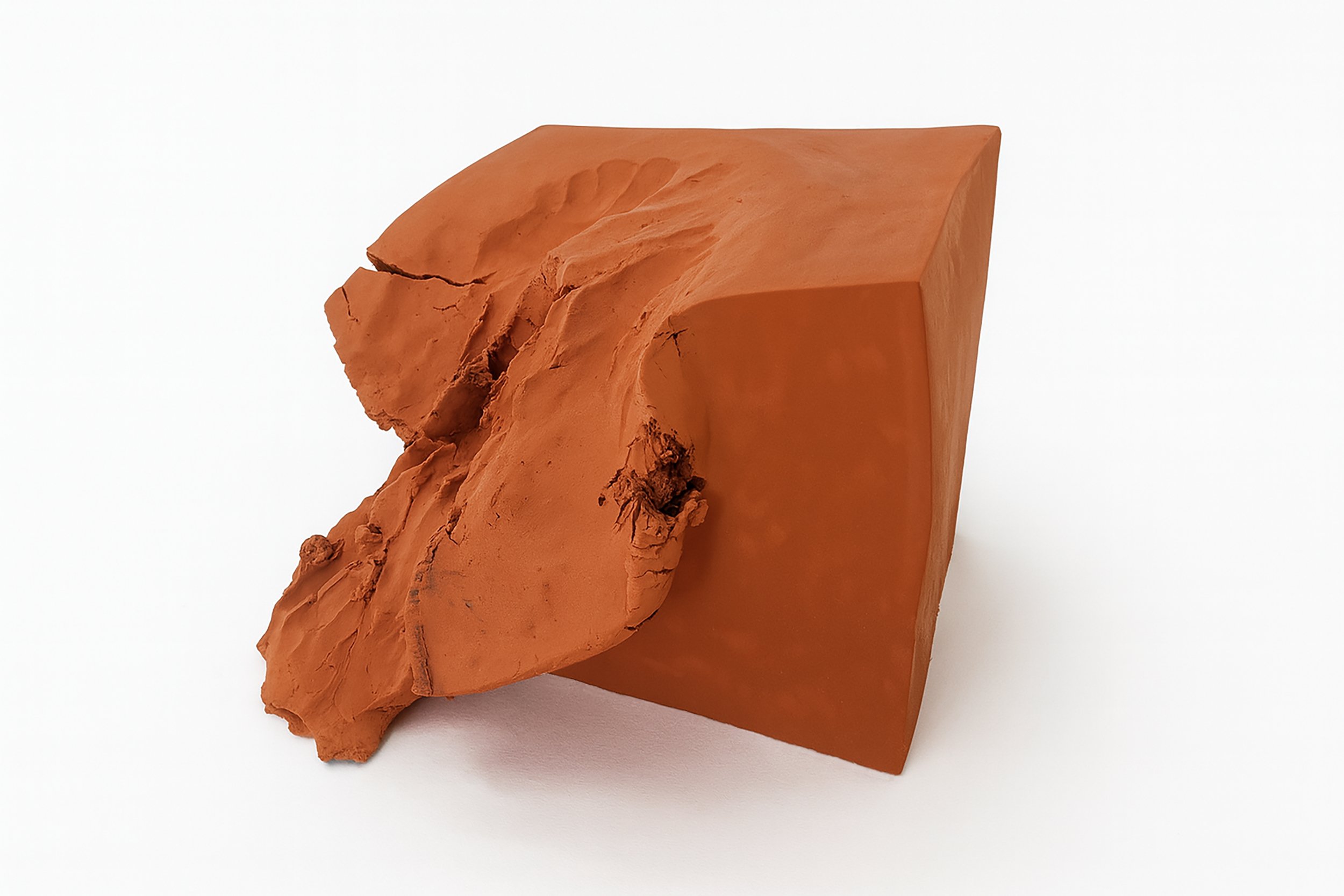
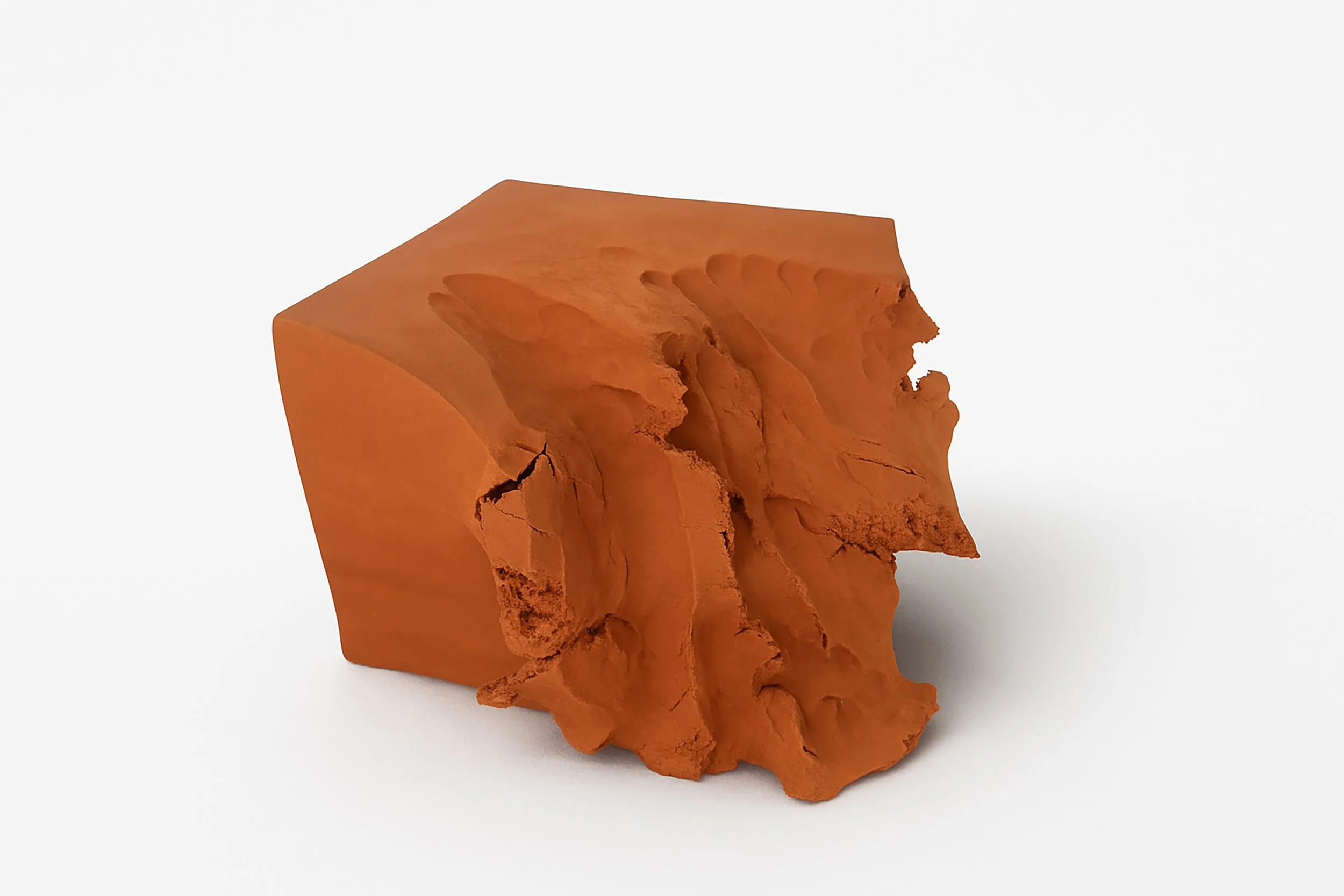
Foot Fall (Monolith 1) constitutes the foundational module of the Monoliths series, developed from the performative project To the End of the World. Created in advance in the studio, this sculpture condenses a fundamental gesture of the performance: the controlled fall of the body’s weight. The work began with small-scale experiments in which the dancer manipulated tiny cubic volumes with his fingers, using them as surrogates for the legs in order to physically internalize the logic of the fall before translating it to the full body.
The choreography of the gesture was precisely calibrated: initiating the action from the top of the cube and slowly guiding the material downward, without any abrupt impact, so as to preserve the internal cohesion of the clay and the structural stability of the volume. The density of the earthenware made the process particularly demanding, requiring the dancer to maintain balance without slipping, in a constant tension between control and release. The protocol also dictated the protection of the cube’s edges: only those designated by the falling foot were allowed to transform, while the others remained sharp and intact.
The resulting form appears to yield and flow from a specific corner, as if the fall itself had been slowed down. The preserved edges maintain the geometric rigor of the block, while the impacted zone records the paradoxical softness of weight in motion. Foot Fall thus asserts a sculpture that is both contained and traversed by gravity, in which the choreographic gesture—mastered up to the threshold of imbalance—remains legible within the frozen material.
Chute de Pieds
2022
Chute de Pieds (Monolithe 1) constitue le module matriciel de la série des Monolithes, issue du projet performatif Jusqu’au bout du monde. Réalisée en amont à l’atelier, cette sculpture condense un geste fondamental de la performance : la chute contrôlée du poids du corps. Le travail a commencé par des expérimentations à petite échelle, au cours desquelles le danseur manipulait de petits volumes cubiques avec ses doigts, ceux-ci mimant les jambes afin d’intégrer physiquement la logique de la chute avant sa transposition au corps entier.
La chorégraphie du geste a été précisément réglée : partir du sommet du cube et engager lentement la matière vers le bas, sans percussion brutale, afin de préserver la cohésion interne de la terre et la stabilité du volume. La densité de la faïence rendait l’exercice délicat, obligeant le danseur à maintenir l’équilibre sans glisser, dans une tension constante entre contrôle et abandon. Le protocole imposait également la protection des arêtes du cube : seules celles désignées par la chute du pied devaient se transformer, tandis que les autres restaient nettes et intactes.
Il en résulte une forme où la matière semble céder et s’écouler à partir d’un angle précis, comme ralentie dans sa chute. Les arêtes conservées maintiennent la rigueur géométrique du bloc, tandis que la zone impactée enregistre la douceur paradoxale du poids en mouvement. Chute de Pieds affirme ainsi une sculpture à la fois contenue et traversée par la gravité, où le geste chorégraphique, maîtrisé jusqu’au seuil de la perte d’équilibre, demeure lisible dans la matière figée.