Continuum
2012
Continuum extends a line of inquiry initiated while writing an article on the groundbreaking work of the Oakes brothers, in which perspective is conceived as a physical experience, produced on an almost infinite spherical surface that actively engages the viewer’s eye and body. I found an echo of this visual conception of infinity in the research of Frederick Kiesler, and more specifically in his project Endless House, summarized by the foundational statement: “Endless like the human body.”
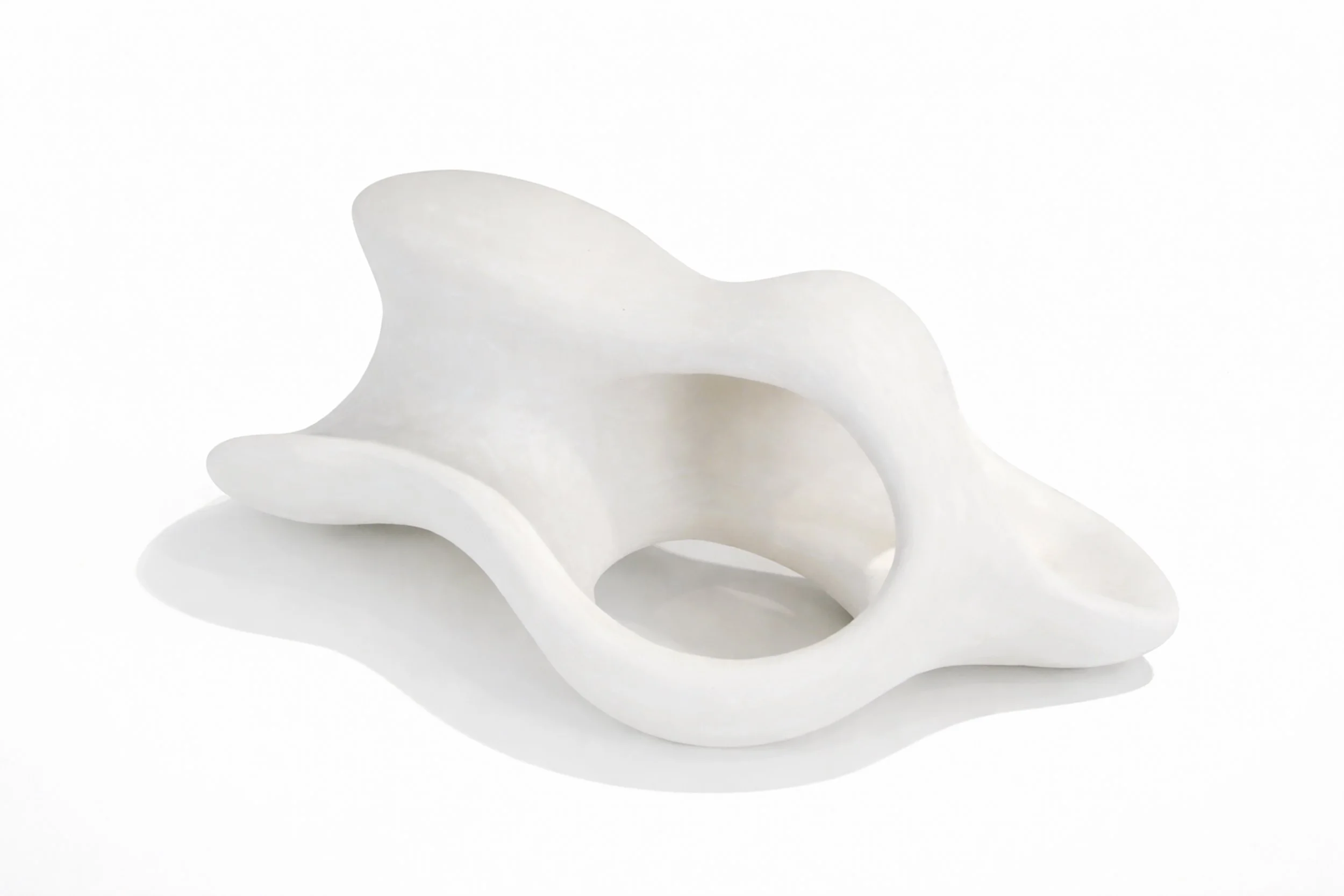
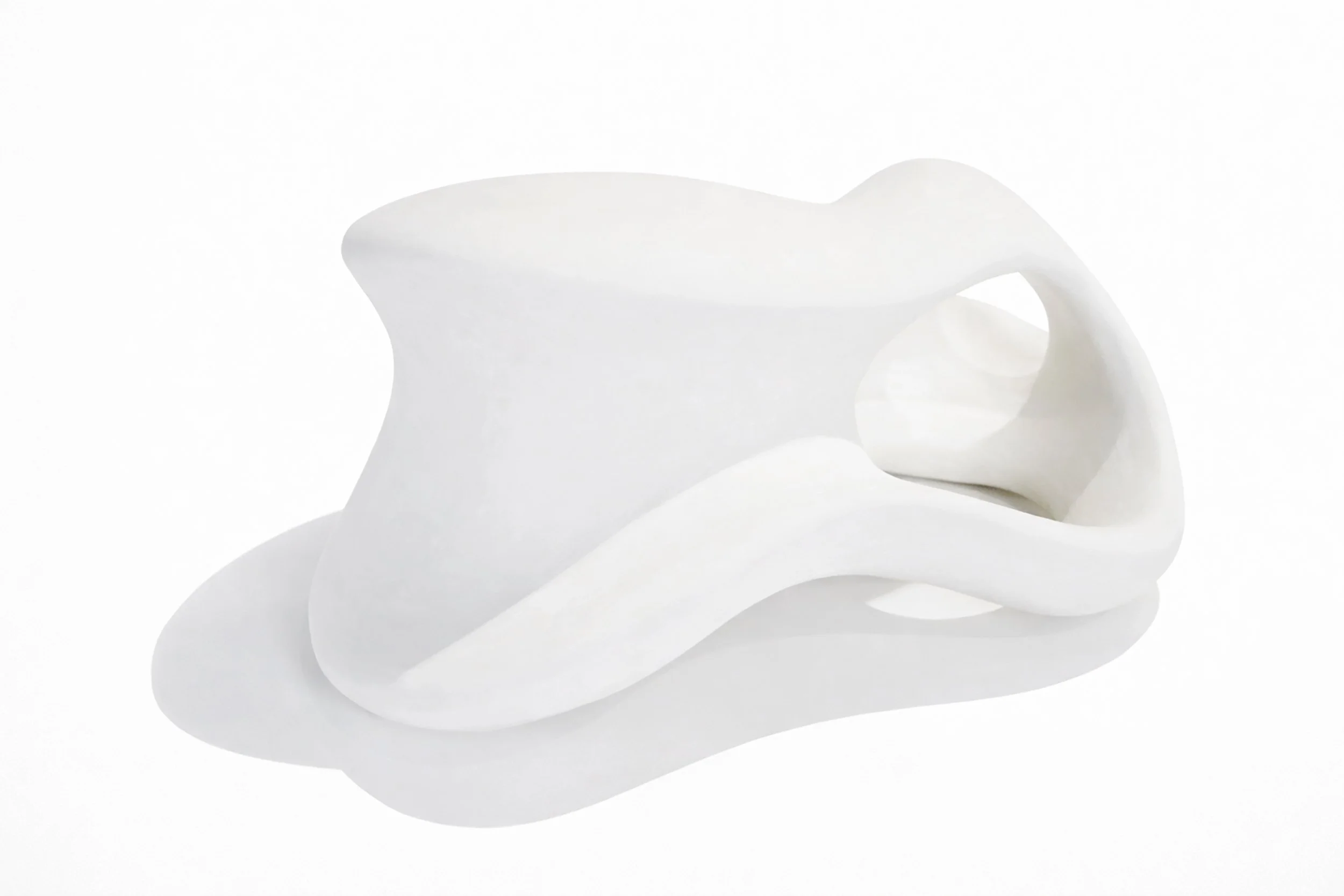
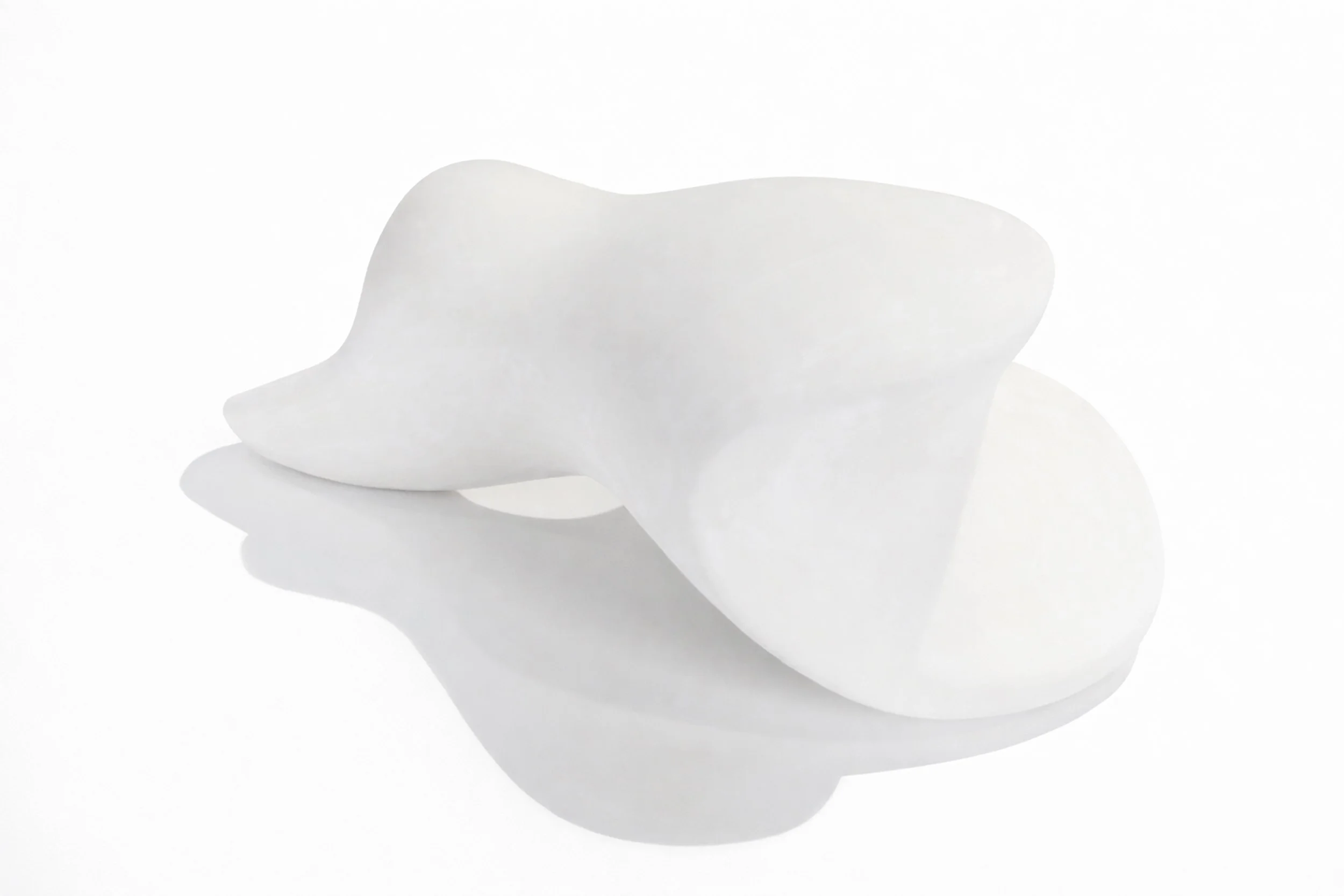
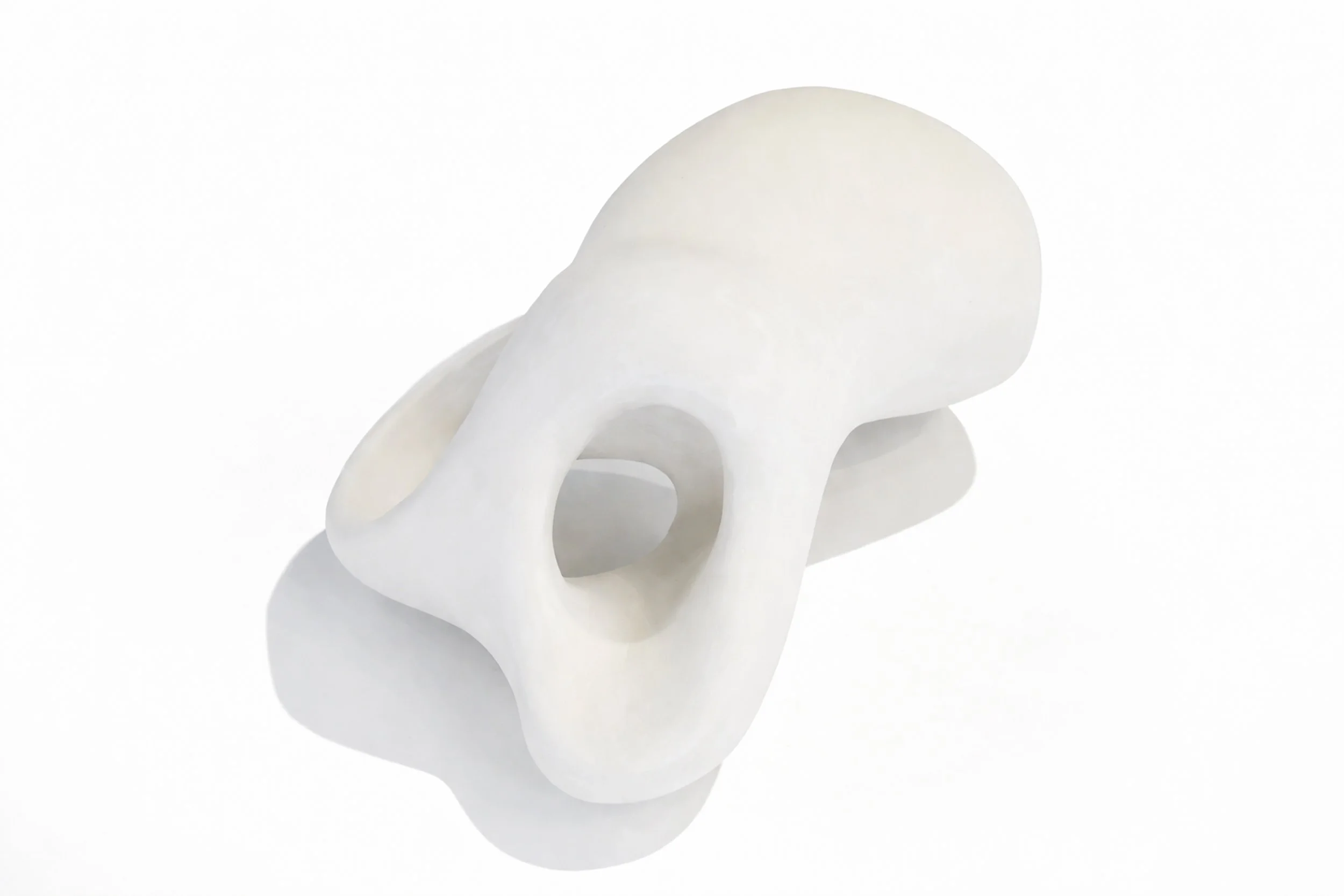
From this point onward, I developed Continuum as a sculptural translation of this idea: a form without beginning or end, in which space unfolds through continuous transitions rather than ruptures. Created from a cast of my own torso, the sculpture was hollowed out, inverted, and worked like a Möbius strip, producing a habitable volume at the scale of the gaze — a kind of organic micro-architecture composed of open and covered zones, interior and exterior, unfolding without hierarchy. The softness of the curves and the continuity of the surfaces dissolve any sense of frontality in favor of a fluid passage between inside and outside, body and architecture. Continuum thus proposes an embodied architecture: a space conceived as a sensitive extension of the human body — infinite, traversable, and in perpetual transformation.
Continuum
2012
Continuum s’inscrit dans le prolongement d’une réflexion que j’ai amorcée lors de l’écriture d’un article consacré au travail révolutionnaire des frères Oakes, où la perspective est pensée comme une expérience physique, créée sur un support sphérique presque infini, engageant activement l’œil et le corps du spectateur. J’ai trouvé un écho à cette conception visuelle de l’infini dans les recherches de Frederick Kiesler, et plus particulièrement dans son projet de l’Endless House, résumé par cette formule fondatrice : “Endless like the human body.”
À partir de là, j’ai construit Continuum comme une traduction sculpturale de cette idée : une forme sans début ni fin, où l’espace se déploie par transitions continues plutôt que par ruptures. Réalisée à partir du moulage de mon propre buste, la sculpture a été évidée, retournée et travaillée comme un anneau de Möbius, afin de produire un volume habitable à l’échelle du regard — une sorte de micro-architecture organique composée de zones ouvertes et couvertes, intérieures et extérieures, qui s’enchaînent sans hiérarchie. Les courbes douces et la continuité des surfaces effacent toute frontalité au profit d’un passage fluide entre dedans et dehors, corps et architecture. Continuum propose ainsi une architecture incarnée : un espace pensé comme le prolongement sensible du corps humain, infini, traversable et en perpétuelle transformation.